
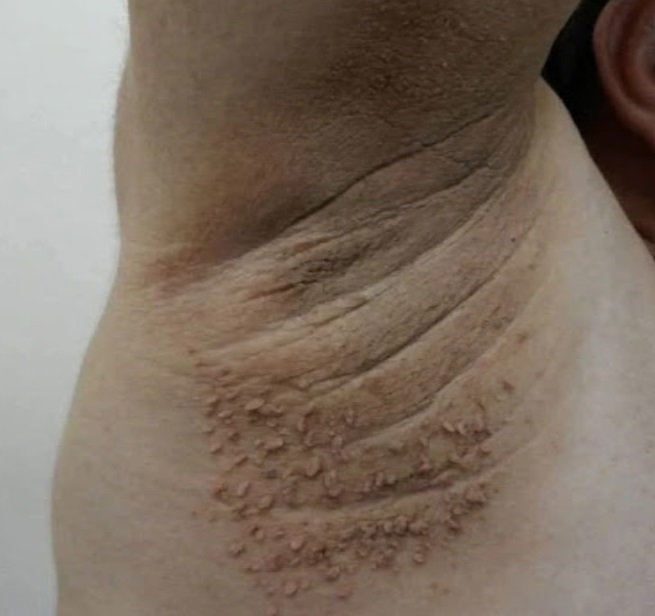
Dark Velvety Skin Patches: What They May Mean
Have you ever noticed dark, velvety patches of skin that don’t disappear even after washing or exfoliating? While these areas are often harmless, they can sometimes be linked to an underlying health condition rather than poor hygiene.
One possible cause is acanthosis nigricans, a skin condition that commonly appears on the:
Back of the neck
Underarms
Groin
Elbows and knees
Under the breasts
The affected skin may become darker, thicker, and feel soft or velvety.
What Causes It?
Acanthosis nigricans is often associated with insulin resistance, a condition in which the body has difficulty using insulin effectively. It can also occur alongside other medical conditions, certain medications, hormonal disorders, or, in some cases, be inherited.
Having these skin changes does not automatically mean you have diabetes, but they may be a reason to discuss your symptoms with a healthcare professional.
What Should You Do?
If you notice new or changing dark patches on your skin:
Avoid excessive scrubbing, as it may irritate the skin.
Schedule an appointment with your healthcare provider for an evaluation.
Follow a balanced diet and stay physically active to support overall health.
Ask your doctor whether any medications or underlying conditions could be contributing.
Frequently Asked Questions
Can the patches disappear?
In some people, treating the underlying cause or improving insulin sensitivity may reduce their appearance over time.
Are they contagious?
No. Acanthosis nigricans is not contagious and cannot be spread from person to person.
Should I use skin-lightening products?
Cosmetic products may not address the underlying cause. A healthcare professional can recommend the most appropriate treatment if needed.
Final Thoughts
Dark, velvety skin patches are not caused by poor hygiene. While they are often harmless, they can sometimes be a sign of an underlying health condition. If you notice these changes, consider discussing them with a healthcare provider for proper evaluation and guidance.
Disclaimer: This article is for informational purposes only and should not be considered medical advice, diagnosis, or treatment. Always consult a qualified healthcare professional regarding any concerns about your health.