
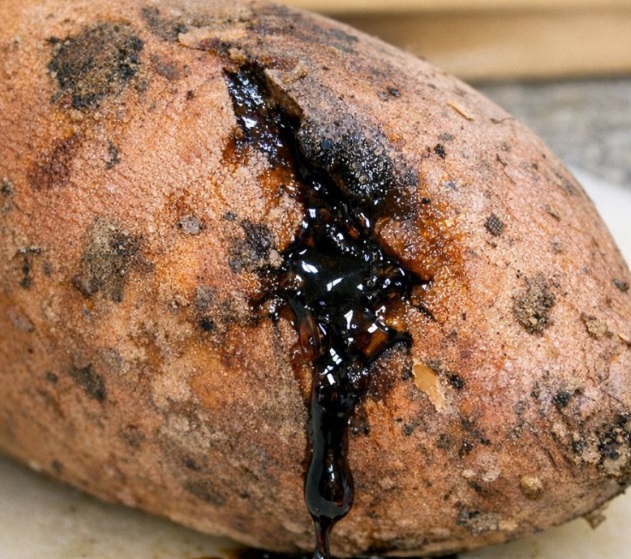
Why Is My Sweet Potato Leaking a Dark, Sticky Liquid?
Sweet potatoes are a kitchen staple for good reason. They’re naturally sweet, easy to prepare, and delicious roasted, baked, mashed, or added to a comforting family dinner. But every now and then, you might notice something unusual while reaching for one in the pantry: a dark, sticky liquid seeping from the skin.
It’s understandable to wonder whether that sticky substance is normal or a sign that the sweet potato has gone bad. The answer depends on the condition of the potato, how it has been stored, and whether you notice other changes.
Before deciding whether to cook it or throw it away, here are some useful things to know about dark, sticky spots on sweet potatoes.
1. Why Do Sweet Potatoes Sometimes Leak a Dark, Sticky Liquid?
Sweet potatoes contain natural sugars, starches, and moisture. When the skin is damaged by a cut, bruise, or pressure, moisture and other substances from the damaged tissue may collect on the surface.
However, a dark, sticky liquid does not automatically mean that natural sugar is leaking out. Sweet potatoes can develop different types of discoloration and deterioration during storage, and the appearance alone cannot always identify the cause.
If you notice unusual liquid on a sweet potato, examine the surrounding skin and the overall condition of the vegetable before deciding what to do with it.
2. Can Natural Sugars Make a Sweet Potato Sticky?
Yes, natural sugars contribute to the sweetness of sweet potatoes, and their starch content can change during storage under suitable conditions. Some sweet potatoes may also release moisture when their skin or flesh is damaged.
Still, it is important not to assume that every sticky substance is harmless sugar syrup. Its color, consistency, and smell may offer clues, but they cannot reliably establish whether the vegetable is safe to eat.
A sweet potato that looks unusual deserves a closer inspection rather than an automatic decision to cook it.
3. What Does Normal Seepage Look Like?
A small amount of clear or slightly amber-colored moisture around a fresh cut or damaged spot may be less concerning than widespread dark liquid accompanied by deterioration.
Look at the whole sweet potato rather than judging it by one characteristic. Is the skin otherwise firm? Is the surrounding area free from visible mold? Does the vegetable have a normal, mild smell?
These observations can help you identify obvious warning signs, but they are not a guarantee of safety. When the source of the liquid is unclear, especially if it is dark or unusual, discarding the sweet potato is the safer choice.
4. What Smell and Texture Should You Look For?
A fresh sweet potato generally feels firm and has a mild, earthy smell. Changes in either characteristic can indicate that it has started to deteriorate.
Watch for these warning signs:
- Unpleasant odor: A sour, fermented, or rotten smell is a reason to discard the sweet potato.
- Mushy or wet areas: Extensive softness, leaking fluid, or collapsing tissue can indicate decay.
- Visible mold: Fuzzy growth or mold around the leaking area is a warning sign.
- Extensive discoloration: Large blackened, wet, or deteriorating areas deserve particular caution.
Do not taste a sweet potato to determine whether it has spoiled. If several warning signs are present, throw it away.
5. Is Dark Discoloration Always a Sign of Rot?
Not necessarily. Sweet potatoes can develop discoloration for several reasons, including bruising, physical damage, and natural changes in the flesh after cutting or cooking.
The important distinction is whether the discoloration appears alongside other signs of deterioration. A dark patch accompanied by mushiness, an unpleasant odor, or leaking liquid is more concerning than an isolated cosmetic mark.
Because different types of discoloration can look similar, it is not always possible to identify the cause from appearance alone.
6. How Storage Conditions Affect Sweet Potatoes
Storage plays an important role in maintaining the quality of sweet potatoes. Excess moisture, poor ventilation, physical damage, and unsuitable temperatures can shorten their storage life.
For best results, store raw sweet potatoes in a cool, dry, dark, well-ventilated place. Keep them away from damp areas and avoid storing them in sealed containers that trap moisture.
A typical recommendation is around 55–60°F (13–16°C), although the ideal conditions depend on the variety and storage duration. Ordinary household refrigerators are generally too cold for storing raw sweet potatoes for extended periods and can negatively affect their quality.
Check stored sweet potatoes periodically and remove any that show clear signs of decay.
7. Can You Cut Away a Damaged Spot and Still Eat the Sweet Potato?
That depends on the type and extent of the damage.
A firm sweet potato with a small, superficial bruise or minor mechanical injury may still be usable after the damaged portion is removed. However, a potato with unexplained dark leakage, mold, extensive softness, or signs of rot should be discarded rather than trimmed in an attempt to save it.
Do not assume that removing the visible spot makes a deteriorated sweet potato safe. Mold or decay may extend beyond the area that you can see.
When the cause of the leakage is uncertain, replacing the potato is the more cautious option.
8. Does Cooking Make a Leaking Sweet Potato Safe?
Cooking sweet potatoes thoroughly is important for food safety, but cooking is not a reliable way to make spoiled produce safe.
Heat can destroy many harmful microorganisms, but it may not eliminate every hazard associated with spoilage. For this reason, do not bake, roast, boil, or mash a sweet potato that shows clear signs of decay.
If a sweet potato is fresh and in good condition, it can be prepared in many ways. Roasting brings out its natural sweetness, while boiling makes it easy to mash. The key is to start with produce that is suitable for eating.
9. How to Keep Sweet Potatoes Fresh Longer
A few simple storage habits can help preserve the quality of sweet potatoes:
- Choose firm sweet potatoes without wet, damaged, or visibly moldy areas.
- Store them in a cool, dry, dark location with good airflow.
- Keep them away from excess moisture and direct sunlight.
- Handle them gently to avoid cuts and bruises.
- Inspect stored vegetables regularly and remove any showing signs of decay.
- Wash sweet potatoes under running water before preparing them, rather than washing them before long-term storage.
These steps can help reduce avoidable damage and make it easier to spot deterioration early.
10. When Should You Throw Away a Sweet Potato?
Discard a sweet potato if it has visible mold, a rotten smell, extensive mushiness, or unexplained dark leakage accompanied by other signs of deterioration.
You should also avoid eating it if the flesh appears extensively decayed or the vegetable has become wet and broken down.
Remember that smell and appearance cannot detect every possible food safety risk. When a sweet potato has an unusual, unexplained condition and you cannot confidently assess it, discarding it is the safest decision.
Frequently Asked Questions
Is the sticky liquid on a sweet potato always sugar?
No. Natural sugars may contribute to stickiness, but the liquid could also be moisture associated with damaged or deteriorating tissue. Its appearance alone cannot confirm its composition.
Can I eat a sweet potato with a small dark spot?
A small, superficial bruise on an otherwise firm, fresh sweet potato may be removable. If the spot is wet, mushy, moldy, or associated with unexplained leakage, discard the vegetable.
Should sweet potatoes be stored in the refrigerator?
For raw, whole sweet potatoes, a cool, dry, dark, well-ventilated storage area is generally preferable to ordinary refrigerator temperatures. Refrigeration can affect their texture and quality.
Can I wash away the sticky liquid?
Washing may remove surface residue, but it cannot establish whether the sweet potato is safe. Evaluate its overall condition, and discard it if there are signs of spoilage.
Will baking fix a sweet potato that has started to rot?
No. Cooking is not a dependable way to make spoiled produce safe to eat. Discard sweet potatoes that show clear signs of decay.
Final Thoughts
Finding a dark, sticky liquid on a sweet potato can be surprising, especially when the rest of your produce looks perfectly normal. Although natural sugars and damaged tissue may contribute to stickiness, the appearance of the liquid alone cannot tell you exactly what is happening.
Pay attention to the sweet potato’s overall condition, store your vegetables properly, and take visible signs of spoilage seriously. When the cause of unusual leakage is unclear, it is better to choose a fresh sweet potato than risk eating one that may have deteriorated.