
White Worm-Like Threads in Slow Cooker Pasta Sauce: What Are They?
There’s nothing quite like coming home to a meal that has been slowly cooking all day. A slow cooker makes dinner easier, especially when life gets busy and you don’t have much time to spend in the kitchen. But every now and then, something unexpected can appear when you lift the lid.
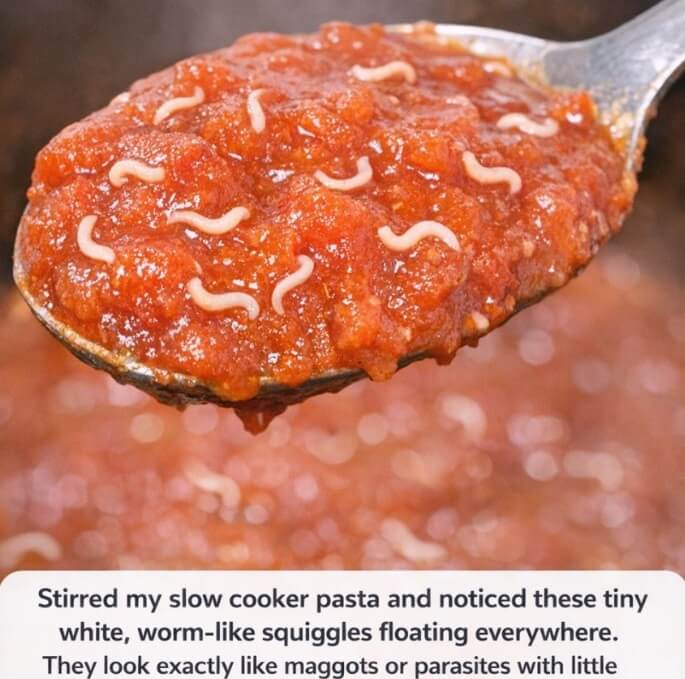
Imagine preparing a pot of homemade pasta sauce and noticing tiny white, thread-like pieces floating on the surface. At first glance, they might look like little worms or maggots, which can certainly make you question whether your dinner is safe to eat.
Before assuming the worst, it’s worth understanding what might be causing the unusual appearance. In some cases, those white threads may be sprouted tomato seeds that were already developing inside the fruit. However, other explanations are possible, and it’s important not to assume that every unusual-looking object is harmless.
1. The Unexpected Surprise: White Squiggles in Your Pasta Sauce
Opening the slow cooker and finding something unusual in your carefully prepared dinner can be unsettling. Small white or cream-colored threads floating in tomato sauce may resemble tiny worms, especially when several appear together.
It’s natural to wonder whether insects have gotten into your ingredients or whether something has gone wrong during cooking.
The first thing to remember is that appearance alone isn’t enough to identify an unfamiliar object. Before serving the meal, take a closer look at the ingredients and consider how they were stored and prepared.
2. Why Those White Threads Might Not Be Maggots
Not every white, worm-like object in food is an insect. Certain plant materials, particularly sprouted seeds, can look surprisingly similar to small larvae.
Tomatoes are one possible source because their seeds can occasionally begin growing while still inside the fruit. This phenomenon is known as vivipary.
However, a slow cooker doesn’t normally make tomato seeds germinate while the sauce cooks. Germination generally begins before the tomatoes are added to the pot.
If the objects have an unfamiliar appearance, don’t rely on visual clues alone to decide that they’re harmless.
3. Sprouted Tomato Seeds: One Possible Explanation
Tomatoes contain numerous small seeds surrounded by a moist, fleshy interior. Under certain conditions, especially when a tomato becomes overripe, some seeds may begin to germinate before the fruit is used.
The tiny white shoots that develop can look like little threads emerging from the seeds.
When tomatoes are chopped or crushed for pasta sauce, these sprouts may become separated from the seeds and appear throughout the mixture.
This is one possible explanation for white, worm-like pieces in tomato-based dishes, particularly when the original tomatoes were very ripe.
4. How Tomato Seed Sprouts End Up in Pasta Sauce
The process begins inside the tomato itself. When conditions are suitable, a seed absorbs moisture and starts developing a small root-like shoot.
As the tomato is cut, crushed, or blended, these developing seeds can become mixed into the sauce.
Some sprouts may remain attached to their seeds, while others can break away during preparation.
Once the ingredients are cooking, the small pieces may become easier to notice against the red background of the sauce.
5. Visual Clues: Sprouted Seeds Versus Insect Larvae
Although certain characteristics may offer clues, identifying an unfamiliar object from appearance alone can be difficult.
Sprouted tomato seeds may have a smooth, narrow, white shoot, sometimes with a small seed still attached.
Insect larvae can have a more distinct body shape, with visible segmentation or other recognizable features. Some may also move independently.
Still, these differences aren’t a reliable food-safety test. If you cannot confidently identify what you’re seeing, it’s better not to taste the food or serve it to others.
6. Is Pasta Sauce With White Threads Safe to Eat?
This is naturally the most important question.
If the white pieces are positively identified as tomato seed sprouts, their presence alone doesn’t mean the sauce is contaminated. However, that doesn’t automatically establish that the entire dish is safe.
Food safety also depends on the condition of the ingredients, proper storage, and whether the slow cooker maintained a safe cooking temperature.
If you suspect insects, spoilage, or contamination, discard the food rather than trying to remove the suspicious pieces with a strainer.
When the identity of the white threads is uncertain, the safest choice is not to eat the dish.
7. When White Threads Could Indicate Insects or Contamination
Although sprouted seeds are one possible explanation, actual insect contamination shouldn’t be overlooked.
Pay attention to anything unusual about the ingredients or finished dish, including:
- Visible insect larvae or insect parts.
- Unusual movement that cannot be explained by the ingredients.
- An unpleasant or unexpected odor.
- Mold or unusual discoloration.
- Signs of pests in stored vegetables or pantry products.
A strange appearance doesn’t always mean food has spoiled, but suspected contamination deserves caution.
If you find evidence of insects or cannot determine what the objects are, discard the food and inspect the ingredients and storage areas.
8. How to Inspect Tomatoes and Other Ingredients Before Cooking
A little preparation can help prevent unpleasant surprises in the kitchen.
Before adding tomatoes to your slow cooker, check them carefully. Fresh tomatoes should be free from mold, leaking areas, and significant soft or damaged spots.
Cutting tomatoes open before cooking also gives you a chance to inspect the seeds and flesh.
For canned tomatoes, check the packaging for damage, leaks, bulging, or other signs of compromised packaging. Never use a can that appears swollen or damaged.
It’s also a good idea to:
- Rinse fresh vegetables under running water.
- Remove damaged or moldy portions when appropriate.
- Check packaged ingredients before opening.
- Store perishable ingredients at safe temperatures.
- Keep your slow cooker and utensils clean.
These simple habits make food preparation more comfortable and help reduce the risk of contamination.
9. Slow Cooker Habits That Help Keep Food Safe
Slow cookers are convenient, but using them correctly is important.
Always follow the manufacturer’s instructions and avoid placing frozen meat directly into a slow cooker unless the appliance instructions specifically allow it.
Keep perishable ingredients refrigerated until preparation, and don’t leave meat, dairy, or other temperature-sensitive ingredients sitting on the counter for extended periods.
A few additional habits are worth following:
- Start with fresh, properly stored ingredients.
- Avoid overfilling the slow cooker.
- Keep the lid in place during cooking.
- Follow recommended cooking times and temperature settings.
- Use a food thermometer to check that meat reaches its recommended safe internal temperature.
These practices help protect your family and make slow cooker meals more dependable.
10. What If You’ve Already Eaten the Pasta?
Finding something unusual in a meal after you’ve eaten it can be worrying.
If the white pieces were identified as tomato seed sprouts, their presence alone is not generally a reason to panic. However, if you suspect the food was contaminated, pay attention to how you feel afterward.
Foodborne illness can cause symptoms such as nausea, vomiting, diarrhea, stomach cramps, and fever.
If you develop concerning symptoms, contact a healthcare professional. Seek prompt medical advice for severe symptoms, signs of dehydration, bloody diarrhea, or a high fever.
It’s always better to take concerns seriously rather than dismissing them.
11. When to Contact a Doctor or Report a Food Safety Concern
If you become ill after eating food that may have been contaminated, speak with a healthcare professional, particularly if symptoms are severe or persistent.
If the suspected contamination came from a commercially packaged product, keep the packaging and product information when possible. You may also contact the manufacturer or the appropriate local food safety authority.
Taking a photograph of the unusual material before discarding the food may also help with identification.
Most importantly, never feel that you have to eat something simply because you’ve already spent time preparing it. Your family’s safety always comes first.
Final Thoughts
Slow cookers are wonderful kitchen helpers, and a little unexpected surprise shouldn’t take away the enjoyment of preparing homemade meals. White, thread-like pieces in tomato sauce can sometimes be sprouted tomato seeds, but other explanations are possible.
The important thing is to inspect your ingredients, understand the difference between a possible natural occurrence and suspected contamination, and avoid eating food when you cannot establish that it’s safe.
A few extra minutes of checking before cooking can make all the difference and help you feel more confident about what’s going into your family’s dinner.
Thank you so much for being here and for taking the time to read. We truly appreciate your continued support and hope to keep sharing helpful kitchen tips and homemade inspiration with you!