
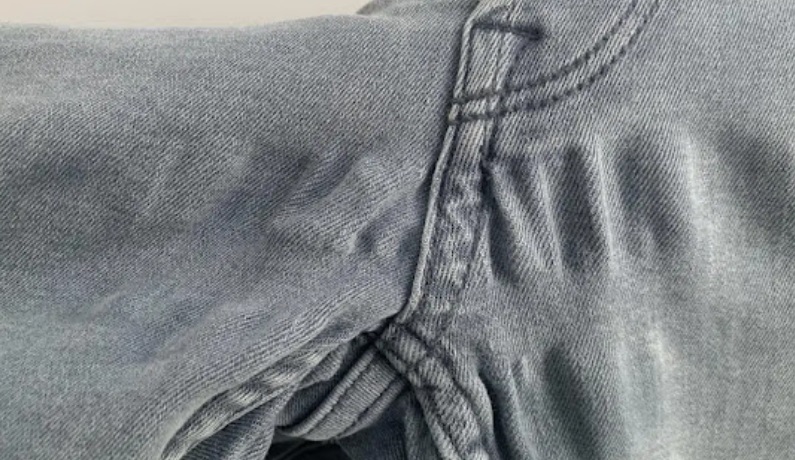
You pull your favorite jeans from the dryer—only to find them covered in strange ripples, puckers, or wavy distortions along the seams, thighs, or pockets. They fit perfectly before the wash… so what happened?
Don’t panic. Those “washing machine wrinkles” aren’t random—they’re a textile science issue, and the good news is: you can prevent them.
The Real Culprits Behind Rippled Jeans
1. Stretch Fabric + Heat = Shrinkage Mismatch
Most modern jeans contain 2–5% spandex or elastane for comfort. But here’s the problem:
Cotton fibers shrink when exposed to heat and agitation.
Synthetic stretch fibers (spandex/elastane) do not shrink—they stay the same length.
This mismatch causes the cotton to pull unevenly around the non-shrinking synthetic threads, creating permanent ripples or puckering—especially at stress points like seams, pockets, or hems.
🌡️ Heat is the #1 trigger—both in the washer (hot water) and dryer (high heat).
2. Overloading the Washer or Dryer
When jeans are crammed into a full load, they can’t move freely. This traps folds and twists during the spin cycle, setting wrinkles that become permanent once dried.
3. Aggressive Spin Cycles
High-speed spinning whips jeans into tight knots, stretching fabric unevenly and locking in distortions.
4. Improper Drying
Tossing damp jeans in a hot dryer while bunched up guarantees ripples. The heat sets every fold in place.
How to Wash Jeans Without Ruining Them
Washing Tips:
Turn jeans inside out—protects color and reduces surface abrasion.
Use cold water only—prevents cotton shrinkage.
Choose gentle cycle—less agitation = less distortion.
Wash with similar items—don’t pair with heavy towels or zippers that cause friction.
Don’t overload—give jeans room to move.
Drying Tips (Most Important!):
Air dry flat or hang by the waistband—never use a hot dryer.
If you must machine dry:
Use low heat or air-fluff only
Remove while slightly damp
Smooth out folds and hang immediately
Pro Tip: Lay jeans flat on a drying rack in their natural shape—this prevents hip or thigh stretching.
Why Some Jeans Are More Prone to Rippling
High-stretch jeans (>3% elastane) ripple more easily
Cheap denim with loose weaves distorts faster
Dark or black jeans often have looser finishes that show puckering more
Pre-distressed or ripped jeans have weakened fibers that warp easily
What NOT to Do
Never wash jeans in hot water
Never tumble dry on high heat
Never wring out jeans by hand (stretches seams)
Never store damp jeans folded (sets creases permanently)
Can You Fix Rippled Jeans?
Unfortunately, once ripples are set by heat, they’re usually permanent. But you can try:
Steam gently with an iron (hover—don’t press) to relax fibers
Wear them while slightly damp to reshape naturally
Tailor alteration (if rippling is severe at seams)
Ironing directly often makes it worse—heat can further shrink cotton fibers.
Final Thought
Your jeans aren’t “ruined”—they’re just telling you they need gentler care.
By skipping the heat and giving them space to breathe, you’ll keep your denim smooth, structured, and looking sharp for years.
“Great jeans deserve great care—not a spin-cycle battle.”
Have you battled rippled jeans? What washing trick saved your favorites? Share your denim wisdom below—we’re all keeping our blues smooth together!