
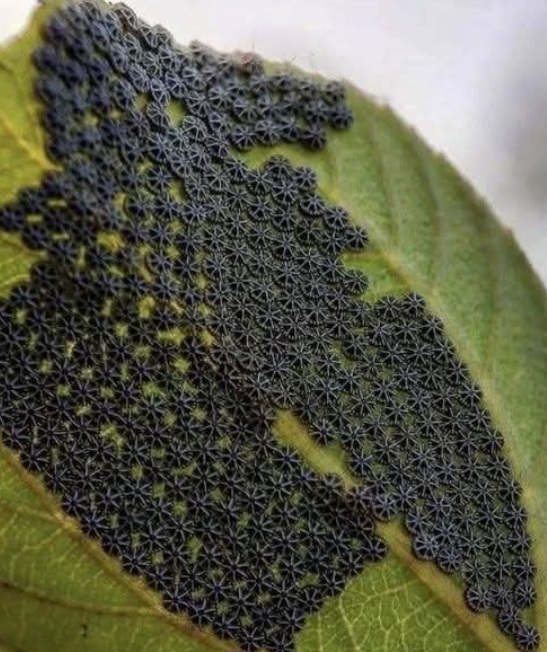
What you’re describing sounds very much like egg clusters from beneficial insects—most likely ladybugs (lady beetles) or possibly lacewings, both of which are garden allies, not pests!
Those “Black Geometric Shapes” Are Probably Ladybug Eggs
Ladybugs lay their eggs in tight clusters on the undersides of leaves—often near aphid colonies (their favorite food).
The eggs are tiny, oval, and range from yellow-orange to dark black, sometimes appearing almost metallic or geometric due to lighting or leaf texture.
They may look strange or even alarming at first—but they’re a great sign! It means nature’s pest control has moved in.
Why This Is Good News for Your Garden
Ladybug larvae (which hatch from these eggs) are voracious predators—a single larva can eat 25–40 aphids per day.
Lacewing eggs look similar but are laid on slender stalks (like tiny mushrooms)—also beneficial.
Both help reduce the need for chemical sprays and keep your plants healthy naturally.
Beneficial Insect Eggs vs. Harmful Pest Signs
Signs of Beneficial Insect Eggs
Found in neat clusters on the undersides of leaves
Often located near aphids or mites
Leaves remain healthy with little to no visible damage
Usually a sign that natural garden predators are helping control pests
Signs of Harmful Garden Pests
Irregular holes, webbing, or slimy trails on plants
Wilting, yellowing, or distorted plant growth
Leaf skeletonizing, chewed edges, or tiny stippled spots
Visible plant stress or spreading damage over time
Tip: If you spot these helpful egg clusters, leave them undisturbed whenever possible. Even organic sprays, including neem oil, may harm beneficial insects that naturally protect your garden.
Final Thought
That “alien lattice” isn’t a threat—it’s hope in miniature.
“The best gardens aren’t pest-free—they’re full of life, balance, and quiet partnerships between plants and protectors.”
Next time you see those mysterious patterns, smile—you’ve got tiny guardians on patrol.
If you’d like, you can describe or share the photo details (color, shape, location on plant), and I can help identify it more precisely!