
Stinkhorn Mushrooms: Understanding Their Fascinating Life Cycle
Finding a strange mushroom in the garden can be surprising, especially when it appears as a small, rounded “egg” one day and develops into a completely different-looking fungus shortly afterward. Stinkhorn mushrooms are known for exactly this unusual transformation.
Although their appearance and smell can be startling, stinkhorns are an interesting part of the natural decomposition process. Here’s what to know about their unusual life cycle and what you can do if you find one in your yard.
What Is a Stinkhorn Mushroom?
Stinkhorns are a group of fungi belonging to the family Phallaceae. They are best known for their distinctive appearance and strong odor when mature.
The name comes from the unpleasant smell produced by the mature mushroom. While the odor may be off-putting to people, it serves an important purpose in the fungus’s reproductive cycle.
Common examples include the common stinkhorn (Phallus impudicus), lattice stinkhorn (Clathrus ruber), and several species in the genus Mutinus.
The Stinkhorn “Egg” Stage
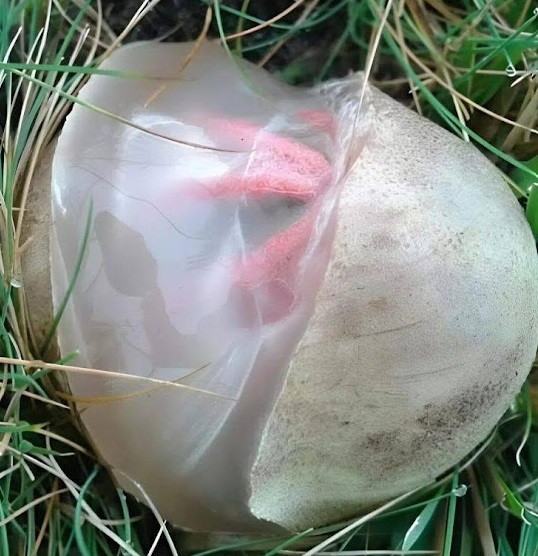
Before a stinkhorn develops its familiar mature shape, it can appear as a small, rounded structure commonly called an “egg.”
At this stage, much of the mature mushroom is already developing inside the outer covering. The immature structure can remain in this stage for some time before the mushroom begins expanding.
When conditions are favorable, the change can happen surprisingly quickly, making it seem as though the mushroom appeared almost overnight.
How Do Stinkhorns Spread Their Spores?
One of the most fascinating features of stinkhorns is the way they distribute their spores.
As the mushroom matures, it produces a dark, sticky substance called gleba. This material contains the spores and has a strong odor that can resemble decaying organic matter.
That smell attracts insects, particularly flies. When insects visit the mushroom, spores can stick to their bodies and be transported to other locations.
In this way, the unpleasant odor is actually an effective part of the fungus’s natural reproductive strategy.
Why Do Stinkhorns Grow in Gardens?
Stinkhorns commonly appear where there is plenty of decomposing organic material.
They may emerge in areas containing:
Wood mulch
Buried or decaying wood
Compost or other organic material
Decaying plant matter
Moist soil rich in organic material
Their presence is generally associated with the decomposition of organic matter rather than with the roots of healthy plants.
Are Stinkhorn Mushrooms Harmful?
Stinkhorns are generally considered more of a nuisance than a garden threat. Their unpleasant odor can be the biggest concern for homeowners.
As with any wild mushroom, however, it is best not to eat it unless it has been positively identified by someone qualified to identify fungi. Children and pets should also be discouraged from handling or consuming unidentified mushrooms.
If you simply want to enjoy the interesting natural process, there is usually no need to disturb the mushroom.
What Should You Do If You Find One?
If a stinkhorn appears in your garden, you have a few simple options.
Leave It Alone
The easiest option is to leave the mushroom where it is. Mature stinkhorns are short-lived and will eventually break down naturally.
Remove It
If the odor is unpleasant or the mushroom is growing somewhere inconvenient, you can remove it carefully. Wearing gloves and placing the mushroom in a sealed bag can help prevent the smell from spreading.
Avoid touching your face or eyes while handling any wild fungus, and wash your hands afterward.
Reduce Decaying Organic Material
If stinkhorns repeatedly appear, you can look at the area for sources of decomposing organic matter, such as old mulch, buried wood, or other plant debris.
Removing unnecessary decaying material may reduce the conditions that encourage them, although it may not completely prevent future mushrooms from appearing.
Stinkhorns Are Part of the Natural Ecosystem
Although stinkhorns may not be the most welcome visitors in a garden, they play a useful role in nature.
Like many fungi, they participate in decomposition by breaking down organic material and returning nutrients to the soil.
Their unusual appearance and insect-assisted reproduction also make them a fascinating example of how fungi have evolved different strategies for surviving and spreading.
Frequently Asked Questions
How long do stinkhorn mushrooms last?
Mature stinkhorns are generally short-lived. Their visible structures can appear and deteriorate within a relatively short period, depending on environmental conditions.
Why do stinkhorns smell so bad?
The mature mushroom produces an odor that attracts insects. These insects help transport the spores to new locations.
Can I leave a stinkhorn in my garden?
Yes. If it is not causing a problem, leaving it alone allows it to complete its natural life cycle and decompose.
Will stinkhorns damage my plants?
Stinkhorns are decomposer fungi and are not generally considered plant pathogens. Their appearance usually reflects the presence of suitable organic material in the soil rather than an attack on healthy plants.
How can I get rid of stinkhorns?
You can carefully remove visible mushrooms and dispose of them. If they continue appearing, inspect the area for decaying wood, old mulch, or other organic material that may be supporting fungal growth.
Final Thoughts
Stinkhorn mushrooms may look unusual and smell unpleasant, but their life cycle is a fascinating example of nature at work. From the hidden “egg” stage to the rapid development of the mature mushroom, every part of their growth is connected to their role as decomposers and spore distributors.
So, if you discover one in your garden, there is no need to panic. Take a closer look, decide whether you want to leave it or remove it, and remember that even the strangest-looking fungi have an important place in the natural world.