
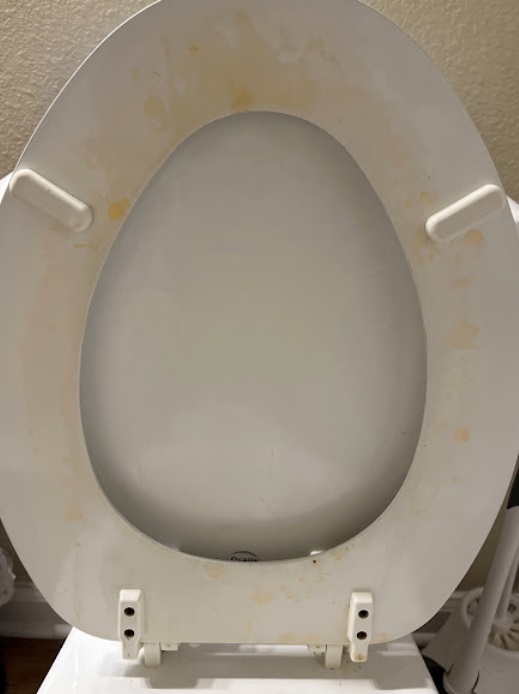
How to Remove a Stubborn Yellow Ring From Your Toilet
Few cleaning problems are more frustrating than a yellow ring around an otherwise clean toilet.
You scrub it, use toilet cleaner, flush, and expect the bowl to look fresh again. Then you notice that stubborn line sitting right below the water level.
The good news is that the problem may not be ordinary dirt. In many cases, yellow or brown toilet rings are caused by mineral deposits from hard water. Rust or iron in the water and dried residue can also contribute to discoloration.
Once you know what you’re dealing with, choosing the right cleaning method becomes much easier.
Why Regular Toilet Cleaner May Not Work
Ordinary toilet cleaners are useful for routine cleaning, but thick mineral deposits can be more difficult to remove.
If the ring is caused by limescale or another hard-water deposit, repeatedly applying more cleaner may not solve the problem. The buildup may need to be loosened with an appropriate descaling product or carefully removed from the porcelain surface.
A Simple Method for Stubborn Mineral Buildup
For suitable glazed porcelain toilets, a pumice stone specifically made for toilet cleaning can help remove stubborn mineral deposits.
The important part is using it correctly.
What You’ll Need
Toilet-cleaning pumice stone
Toilet bowl cleaner
Rubber gloves
Toilet brush
Water
Cleaning cloth or paper towels
Before using an abrasive stone, check the toilet manufacturer’s cleaning recommendations. Do not use one on plastic, acrylic, delicate, coated, or specialty surfaces unless the manufacturer says it is safe.
Step 1: Lower the Water Level
Flush the toilet and, if necessary, lower the water level enough to expose the stained area.
You don’t always need to empty the bowl completely. You simply want easier access to the ring.
Step 2: Keep Everything Wet
Soak the pumice stone thoroughly and keep the porcelain wet throughout the process.
Never use a dry pumice stone on the toilet.
Step 3: Gently Work on the Ring
Lightly rub the wet stone over the mineral buildup using small, controlled movements.
Avoid heavy pressure. The goal is to remove the deposit without damaging the porcelain finish.
Stop occasionally to check your progress.
Step 4: Rinse and Clean
Once the visible buildup has been removed, flush the toilet and clean the bowl normally with your regular toilet cleaner, following the product directions.
Other Options for Lighter Buildup
A pumice stone isn’t the only possible approach.
White vinegar may help loosen some mineral deposits, particularly lighter buildup.
Citric acid or a commercial limescale remover can also be useful for mineral deposits when used according to the product instructions.
These methods may not be enough for an old, thick ring, but they can be worth trying before using mechanical removal.
What About Baking Soda or Bleach?
Baking soda can help with odors and light grime, but it isn’t necessarily effective against thick mineral deposits.
Bleach can be useful for certain disinfecting and cleaning tasks, but it does not necessarily dissolve hard-water buildup.
Most importantly, never mix bleach with vinegar, acidic toilet cleaners, ammonia, or other incompatible cleaning products. Dangerous chemical reactions can occur.
Use one product at a time, follow the label, and provide good ventilation while cleaning.
How to Keep the Ring From Coming Back
If hard water is responsible, the ring may eventually return. Regular maintenance can make a big difference.
Clean the toilet regularly rather than waiting for heavy buildup.
Deal with faint yellow or orange deposits before they become thick.
Check other fixtures for similar mineral deposits.
If staining returns unusually quickly, check for possible plumbing or water-quality issues.
A toilet that continually leaks or leaves water moving across the same area can contribute to persistent staining.
Frequently Asked Questions
Can I use a pumice stone on my toilet?
A pumice stone designed for toilet cleaning can be appropriate for some porcelain toilets. Keep both the stone and surface wet, use light pressure, and check the manufacturer’s recommendations first.
Will vinegar remove a yellow toilet ring?
Vinegar can help with some mineral deposits, especially lighter buildup, but it may not remove an old or thick ring.
Why does my toilet keep getting a yellow ring?
Hard water, mineral deposits, iron in the water, and residue can all cause yellow or brown discoloration. If it returns quickly, plumbing or water-quality issues may also be contributing.
Can bleach remove hard-water stains?
Bleach is not necessarily effective against mineral deposits. A descaling or limescale product may be more suitable.
Can I mix vinegar and bleach?
No. Never mix them. Combining bleach with vinegar or other acidic cleaners can release dangerous chlorine gas.
The Bottom Line
A stubborn yellow toilet ring isn’t always a sign that the toilet hasn’t been cleaned properly. Often, the underlying problem is mineral buildup rather than ordinary dirt.
For appropriate porcelain surfaces, a wet toilet-cleaning pumice stone used gently can help with stubborn deposits. For lighter buildup, vinegar, citric-acid-based products, or a commercial limescale remover may be useful.
The most important thing is to use the right method for the surface—and never mix cleaning chemicals.