
A Fast-Growing Skin Bump: What You Should Know
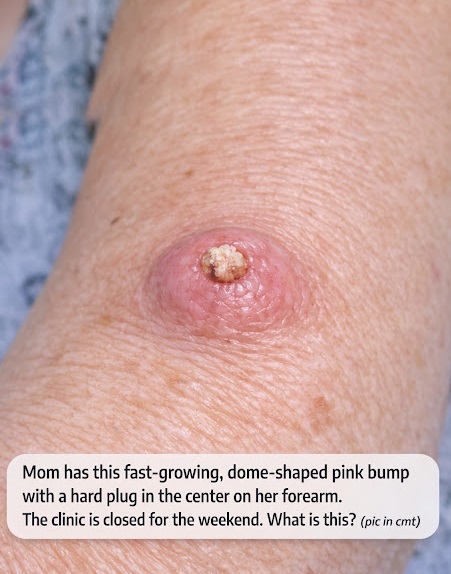
A fast-growing, pink, dome-shaped bump with a firm center can understandably be concerning. One possibility doctors may consider is a keratoacanthoma, a skin growth that can develop relatively quickly, often on sun-exposed areas such as the forearm.
The important point is that appearance alone cannot confirm what the growth is. Keratoacanthoma can closely resemble squamous cell carcinoma, so a suspicious or rapidly changing bump should be examined by a healthcare professional.
What Can a Keratoacanthoma Look Like?
It may appear as a:
Round, raised or dome-shaped bump
Pink, red-pink, or skin-colored growth
Firm lesion with a rough surface
Growth with a central keratin plug
These lesions can sometimes enlarge noticeably over several weeks.
However, other skin conditions can have a similar appearance, so it’s best not to try to diagnose one at home.
What Should You Do?
If the bump is stable and there are no serious symptoms, arrange an appointment with a doctor or dermatologist as soon as reasonably possible.
While waiting:
Keep the area clean.
Cover it loosely with a clean, nonstick dressing if clothing irritates it.
Take a clear photograph to document changes.
Avoid picking, squeezing, cutting, or scratching it.
A photo with a ruler beside the lesion can help show whether its size is changing.
What Should You NOT Do?
Don’t try to remove the hard center yourself.
Avoid:
Cutting or squeezing the bump
Picking at the central plug
Freezing it at home
Burning it
Using wart-removal products
Applying acid-based treatments
These actions can cause bleeding, irritation, or infection and may make the lesion more difficult for a clinician to evaluate.
When Should You Seek Medical Attention Sooner?
Seek prompt medical attention if the area develops persistent bleeding, severe pain, rapidly spreading redness, significant swelling, pus, fever, or dramatic worsening.
If bleeding doesn’t stop after applying steady pressure for about 10–15 minutes, medical attention is recommended.
How Is It Diagnosed?
A clinician will examine features such as the growth’s size, shape, color, surface, and rate of growth. They may also ask when it first appeared and whether it has changed, bled, itched, or become painful.
Because keratoacanthoma and squamous cell carcinoma can look similar, a biopsy or removal may be recommended to determine what the lesion actually is.
Frequently Asked Questions
Is every fast-growing bump a keratoacanthoma?
No. Several skin conditions can look similar. A professional examination is needed to determine the cause.
Can keratoacanthoma be confused with skin cancer?
Yes. It can closely resemble squamous cell carcinoma, which is why suspicious lesions should be evaluated.
Can I remove the hard plug?
No. Don’t pick, cut, or dig into it. Let a healthcare professional evaluate the growth.
Should I wait several weeks to see if it disappears?
It’s better to have a rapidly growing or changing lesion assessed rather than simply waiting to see what happens.
Is the forearm a common location?
Keratoacanthomas can occur on sun-exposed skin, including the forearms.
The Bottom Line
A rapidly growing, dome-shaped pink bump with a firm central plug can have several possible causes, including keratoacanthoma. But you cannot reliably identify it from appearance alone.
Don’t panic, but don’t ignore a rapidly changing skin growth either. Avoid home treatments, document any changes, and arrange a professional examination promptly.
If symptoms such as uncontrolled bleeding, severe pain, spreading redness, pus, fever, or rapid worsening develop, seek medical attention sooner.