
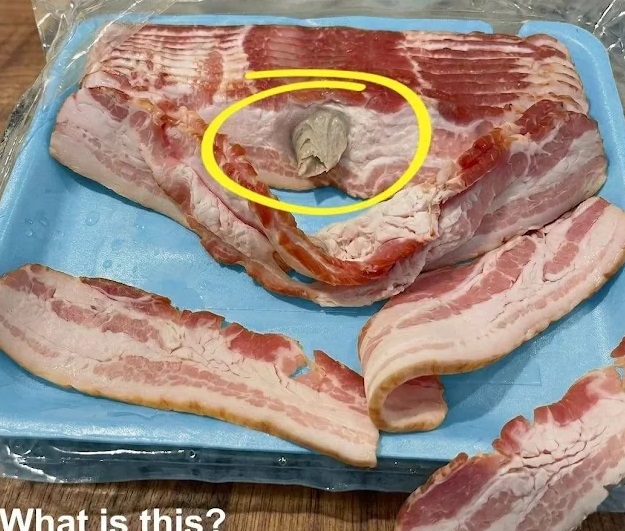
Opening a package of bacon and spotting an unusual lump can be surprising. Many people immediately worry that something is wrong with the meat. In most cases, however, there is a simple explanation.
Bacon comes from pork belly, which naturally contains fat, connective tissue, and other structures that may occasionally appear as small lumps or firm spots when the meat is sliced and packaged.
What Could It Be?
A firm or pale lump in bacon may be:
- A concentrated fat deposit
- Connective tissue
- A natural variation in the meat
These features can look unusual, but they are often a normal part of animal products.
When Is Bacon Safe to Eat?
The bacon is generally safe if:
- It smells fresh and normal
- The package is sealed properly
- There is no slime or sticky residue
- The color appears normal
- It is within the expiration date
If a small section looks unappealing, many people simply trim it away before cooking.
Warning Signs of Spoilage
Discard the bacon if you notice:
- A sour or unpleasant odor
- Mold growth
- Slimy texture
- Unusual green, black, or fuzzy spots
- A damaged or swollen package
When meat shows signs of spoilage, it is always safest not to consume it.
Why This Happens
Modern bacon is sliced very thinly, making natural variations in the meat more visible than they would be in larger cuts of pork. This doesn’t necessarily indicate poor quality or a food safety issue.
Final Thoughts
Finding an unusual lump in bacon can be unexpected, but it is not always a reason to throw away the entire package. Check the product for signs of freshness and spoilage, follow basic food safety guidelines, and when in doubt, choose caution.
A little knowledge can help reduce food waste while keeping your kitchen safe.