
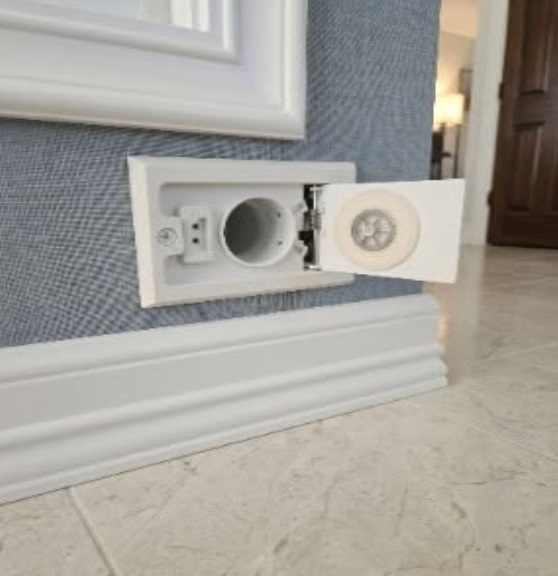
Why Is There an Electrical Outlet So Close to the Floor Near a Door?
Have you ever moved a piece of furniture or opened a door and noticed an electrical outlet sitting unusually close to the floor? At first, it might look like a strange mistake. Most outlets are installed where they’re easy to reach, so finding one tucked beside a doorway or hidden behind an open door can leave you wondering why it’s there.
The truth is that an unusually positioned outlet may have a perfectly practical explanation. It could be connected to equipment that once sat nearby, a specialized electrical installation, or a feature that has since been removed. In older homes especially, renovations and changes over the years can leave behind electrical connections whose original purpose is no longer obvious.
Before assuming it was installed incorrectly, it helps to look at the surrounding area and consider the building’s history. The location can offer useful clues, although the outlet’s exact purpose cannot be confirmed from its appearance alone.
Why Would an Electrical Outlet Be Installed So Low?
Standard household outlets are generally placed at a convenient height for everyday use. However, not every electrical connection is intended for plugging in a lamp, phone charger, or vacuum cleaner.
Sometimes, the position of an outlet reflects the needs of the equipment it was originally installed to serve. If a device was located near the floor, placing its electrical connection nearby could have made sense.
A low outlet might also be less noticeable or fit the layout of a particular room. In some properties, it may be part of an older installation that no longer matches the way the space is used today.
The important thing to remember is that an unusually low outlet is not automatically a sign of poor workmanship. Its purpose depends on the wiring, the equipment it serves, and the history of the property.
Could It Be Connected to the Door?
If the outlet is positioned immediately beside a doorway or becomes hidden when the door opens, you might wonder whether it has something to do with the door itself.
That is one possibility. Depending on the building, an electrical connection near a doorway could be associated with powered door hardware, an access-control system, or other permanently installed equipment.
However, its location alone does not prove that it was installed for a door mechanism. Different homes and buildings have different electrical layouts, and similar-looking outlets can serve entirely different purposes.
Look at the surrounding area for clues without removing covers or touching the wiring. Nearby equipment, an older intercom, a security component, or a former installation may help explain why the connection is there.
Could It Be Left Over From an Older Installation?
Absolutely. Older homes often carry traces of previous renovations and changes in technology.
A property may once have had an intercom, security system, doorbell component, specialized lighting, or another electrical device that is no longer in use. When the equipment was removed, the associated connection may have been left in place.
Over time, walls get repainted, doors are replaced, rooms are remodeled, and electrical systems are updated. Not every unused connection is removed during these changes.
This can leave homeowners with an outlet that looks perfectly ordinary but has no obvious purpose.
If the property has changed hands several times, the original reason for the installation may be difficult to discover without old renovation records or an electrician’s assessment.
How to Investigate an Unusual Outlet Safely
If you have found a low electrical outlet near a door, there are several sensible ways to look for an explanation without interfering with the installation.
- Check the surrounding area. Notice whether there are nearby switches, intercom equipment, door hardware, or other devices that might offer a clue.
- Look for building records. Electrical plans, renovation documents, and property records may help explain why the connection was installed.
- Ask the property owner. If you rent, contact your landlord or property manager. A previous owner may also remember what equipment was once connected there.
- Avoid experimenting with appliances. Do not plug in a random device to see whether the outlet works. Its intended use and electrical condition may be unknown.
- Contact a qualified electrician. If the purpose remains unclear, an electrician can assess the installation and determine what circuit it belongs to.
Never remove the outlet cover or open the electrical box unless you are qualified to work on electrical installations. If you notice exposed wires, scorch marks, sparks, buzzing, unusual heat, or a burning smell, avoid touching the outlet and arrange a professional inspection promptly.
Is an Unusually Low Outlet Safe to Use?
Not necessarily. An outlet can look familiar without being suitable for ordinary household use.
Its safety depends on the condition of the wiring, the circuit, the installation, and any equipment it was designed to supply. Older or modified electrical systems may also contain problems that are not visible from the outside.
Until you know what the connection is for and whether it is safe to use, leave it alone. A qualified electrician can inspect it and advise whether it can be used, needs repair, or should be properly disconnected.
Curiosity is understandable, but testing an unfamiliar electrical connection is not worth the risk.
Frequently Asked Questions
Why is there an electrical outlet just above the floor?
It may have been installed for equipment positioned near the floor, or it could be part of an older electrical installation. The exact reason depends on the building and its wiring.
Why would an outlet be hidden behind a door?
The outlet may have been installed before the room layout or door arrangement changed. It could also be associated with nearby equipment. Its position alone cannot establish the original purpose.
Could a low outlet be connected to an electric door system?
Possibly, especially in a building with powered door hardware or access-control equipment. However, a qualified electrician would need to assess the installation before confirming its purpose.
Why do older homes have unusual electrical outlets?
Older homes may have undergone several renovations, equipment replacements, or changes in how rooms are used. Some electrical connections remain after the equipment they served has been removed.
Should I plug a lamp into an unfamiliar outlet to test it?
No. An unfamiliar outlet should not be tested by trial and error. Have its purpose and condition checked before using it.
Can I remove an old outlet if I no longer need it?
Do not remove it yourself unless you are qualified to work on electrical installations. An electrician can determine whether it is still connected to a live circuit and advise on the appropriate way to handle it.
Final Thoughts
That unusual electrical outlet near the floor may seem like a small mystery, but there could be a practical explanation behind its placement. It might have served a particular device, formed part of an older installation, or remained after a renovation changed the room.
The most useful clues are often the surrounding equipment and the history of the property. Still, no single explanation applies to every low-mounted outlet, and its purpose cannot be established from appearance alone.
If you discover one in your home, take note of its location, check any available building records, and ask a qualified electrician if you are unsure. A little investigation can help solve the mystery while keeping safety first.