
Why Do Public Toilet Seats Have a U-Shaped Opening?
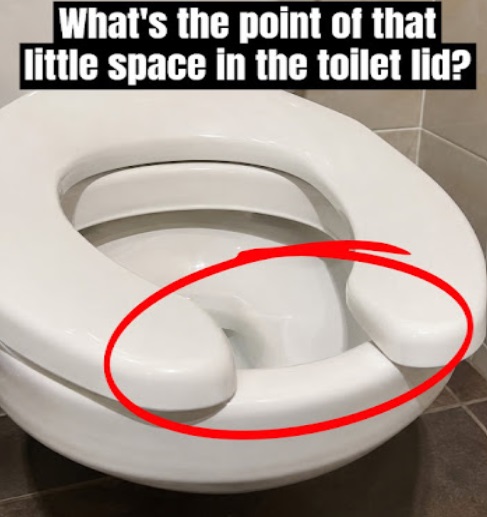
Have you ever walked into a public restroom and noticed that the toilet seat has an opening at the front? It’s one of those everyday details most people barely notice, even though we’ve probably seen it hundreds of times in restaurants, shopping centers, schools, and public buildings.
At first glance, the U-shaped toilet seat might seem like an unusual design choice. Why leave a gap at the front instead of making the seat a complete oval? It turns out that this familiar design has practical reasons behind it, including hygiene considerations, easier cleaning, and plumbing requirements in some locations.
Once you understand the purpose of an open-front toilet seat, you’ll see that even the simplest features in a public restroom can have a practical explanation.
What Is a U-Shaped Toilet Seat?
- A U-shaped toilet seat, also known as an open-front toilet seat, has a gap at the front rather than forming a complete ring.
- This style is commonly found in public and commercial restrooms, including facilities in restaurants, schools, offices, and other busy buildings.
- Unlike many residential toilet seats, which have a closed oval shape, open-front seats are designed with particular public restroom needs in mind. Their shape can make certain cleaning tasks more convenient and may help accommodate specific hygiene practices.
- However, the exact reason a particular toilet has this style depends on the facility, its design requirements, and any applicable plumbing codes.
Why Do Public Restrooms Use U-Shaped Toilet Seats?
There isn’t just one explanation. Several practical considerations help explain why open-front toilet seats are common in public facilities.
1. Hygiene Considerations
One reason associated with the open-front design is personal hygiene.
The gap creates an opening at the front of the seat rather than a continuous surface. This can reduce certain types of contact with the front portion of the seat during use.
However, the shape does not prevent germs from being present, and it should not be considered a guarantee of better hygiene. Toilet seats still require appropriate cleaning, particularly in facilities used by many people throughout the day.
2. Easier Cleaning
Public restrooms need frequent cleaning, and small design details can affect how easily staff maintain a fixture.
The open-front shape provides access to the front of the toilet bowl and may make some areas easier to reach when cleaning around the seat.
This can be useful in busy facilities where toilets must be cleaned and inspected regularly.
The design alone does not determine how clean a restroom is, though. Proper cleaning procedures and regular maintenance remain essential.
3. Plumbing and Building Codes
Another important consideration is the role of plumbing regulations.
Some versions of plumbing codes used in the United States have included requirements or provisions for open-front toilet seats in certain public restroom applications.
These rules are not universal. Requirements can vary by jurisdiction, building type, and the edition of the code adopted by the local authority.
For that reason, it would be inaccurate to say that every public restroom everywhere must have a U-shaped toilet seat.
4. Practical Use in Commercial Facilities
Public restrooms experience much more frequent use than most residential bathrooms. Their fixtures must be practical, durable, and relatively easy to maintain.
Open-front seats are one design used in commercial and institutional settings to meet some of these needs.
That doesn’t mean every U-shaped seat is automatically more durable or comfortable than a closed-front model. Materials, construction, installation, and maintenance all influence how well a toilet seat performs.
Are U-Shaped Toilet Seats More Hygienic?
The short answer is that the shape may offer some practical hygiene and cleaning advantages, but it does not guarantee a cleaner toilet.
A toilet seat can become contaminated regardless of whether it is round, oval, U-shaped, or closed at the front. The condition of the restroom and the cleaning routine are much more important than the shape alone.
Good public restroom hygiene depends on several factors:
- Regular cleaning and appropriate disinfection
- Proper handwashing
- Well-maintained plumbing fixtures
- Functional ventilation and drainage
- Prompt attention to visible dirt or maintenance problems
The open-front design is best understood as one practical feature of certain public restroom fixtures, rather than a complete solution to hygiene concerns.
Why Are Home Toilet Seats Usually Different?
If you’ve noticed U-shaped seats in public restrooms but a closed-front seat at home, you’re not imagining things.
Residential bathrooms generally offer more freedom when it comes to choosing a toilet seat. Homeowners can select a shape based on comfort, appearance, dimensions, and personal preference.
Closed-front toilet seats are popular in homes because many people like their familiar appearance and continuous design.
Public facilities, on the other hand, may need to consider commercial use, maintenance requirements, accessibility, and applicable building regulations.
These differences help explain why the two settings often use different toilet seat styles.
Are U-Shaped Toilet Seats Required by Law?
Not everywhere.
Some local plumbing codes may require or specify open-front toilet seats for certain public restroom installations. Other jurisdictions may follow different requirements.
The applicable rule depends on the location, the type of facility, and the regulations in force when the installation is approved.
If you’re curious about the requirements for a particular building, the local building department or plumbing authority is the best place to check.
Other Everyday Features in Public Restrooms
- Once you start paying attention, public restrooms contain many design features that serve practical purposes.
- Automatic faucets: Sensor-operated faucets allow people to turn on the water without touching a handle.
- Automatic flush valves: These systems can flush toilets without requiring users to operate a manual handle.
- Touchless soap dispensers: These can reduce the need to touch shared surfaces when dispensing soap.
- Hand dryers and paper towels: Both provide ways to dry hands after washing, an important part of everyday hand hygiene.
- Stall partitions: Their design can reflect considerations such as privacy, ventilation, cleaning, visibility, and emergency access.
- Not every feature has a single explanation, but many are shaped by the practical needs of busy public facilities.
Frequently Asked Questions
Why is there a gap at the front of public toilet seats?
The gap creates an open-front design associated with hygiene considerations, easier cleaning, and certain plumbing-code requirements. The exact reason for a particular installation may vary.
Are U-shaped toilet seats cleaner than regular seats?
Not necessarily. Their design may make some cleaning tasks easier, but cleanliness depends on proper maintenance and cleaning practices.
Are U-shaped toilet seats required by law?
Some jurisdictions specify or require open-front seats in certain public restroom applications. There is no single rule that applies to every public restroom worldwide.
Why do most homes have closed-front toilet seats?
Residential bathrooms generally allow more personal choice in seat design. Closed-front seats are popular because of their familiar appearance and the comfort many users associate with them.
Does the U-shaped design prevent germs from spreading?
No toilet seat shape guarantees protection from germs. Regular cleaning, proper handwashing, and good restroom maintenance remain important.
What is the difference between an open-front and a closed-front toilet seat?
An open-front seat has a gap at the front, forming a U shape. A closed-front seat forms a continuous ring around the opening.
Final Thoughts
The next time you visit a public restroom, that familiar U-shaped toilet seat may catch your attention in a new way.
Its design is associated with practical considerations such as cleaning, hygiene, commercial use, and plumbing requirements in certain locations. However, not every seat has the same explanation, and the shape alone does not guarantee better hygiene.
It’s a good reminder that ordinary objects often have more thought behind their design than we realize.
Sometimes, a small detail we have seen countless times turns out to be an interesting piece of everyday design history.