
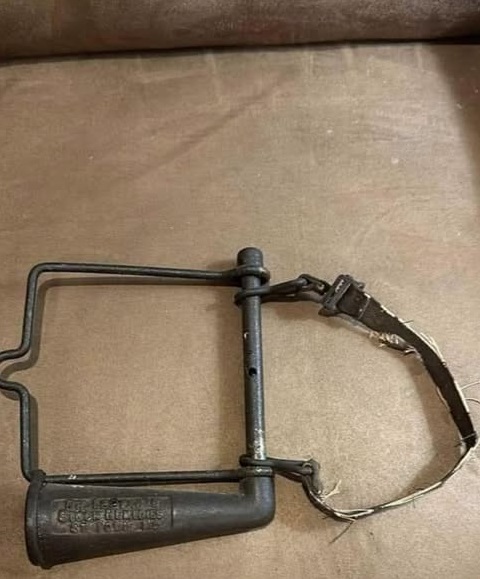
The Strange Antique Tool That Was Once Used to Treat Horses
At first glance, an old brass instrument with a curved tube, cylindrical body, and unusual fittings can be difficult to identify.
If you found one in an old barn, farmhouse, workshop, or family collection, however, there is a possibility that it could be an antique horse drencher—a historical veterinary tool used to administer liquids or other treatments to horses and large animals.
Its unusual design had a practical purpose: helping people deliver treatments to animals that could be difficult to medicate.
What Was a Horse Drencher?
- A horse drencher was a veterinary instrument designed to help administer medication or other substances through an animal’s mouth.
- Historical drenching tools existed in different forms. Some were relatively simple, while later examples could include a reservoir, delivery tube, plunger, mouthpiece, or other fittings.
- One documented example in the Michigan State University collection dates to around 1720 and is associated with English farrier William Gibson.
- Other horse-drenching instruments continued to be produced much later, showing how the basic idea remained useful as veterinary equipment developed.
Why Were Horses Drenched?
- Drenching provided a way to administer liquid treatments to horses and other animals.
- Historically, veterinary practitioners used various substances when treating digestive problems and other illnesses. Instruments of this type could help deliver those substances more directly.
- Digestive problems such as colic were particularly important in horse care. Colic describes abdominal pain rather than one specific disease, and its causes can vary considerably.
- Historical veterinary instruments provide an interesting look at how animal care was carried out before modern diagnostic equipment and treatments became widely available.
How Did the Instrument Work?
The exact design depended on the particular model.
A horse drencher could include features such as:
A reservoir for holding a treatment
A curved or elongated delivery tube
A plunger or pumping mechanism
A mouthpiece or bit-like fitting
A handle or ring
Additional metal fittings
The general purpose was to allow the operator to deliver a substance into the animal’s mouth.
The design demonstrates how historical veterinary equipment was shaped around the practical challenges of treating large animals.
Why Were Some Made From Brass?
- Brass was commonly used for many historical tools and instruments because it was durable and could be formed into useful shapes.
- Its warm golden color also gives many surviving veterinary instruments a distinctive appearance.
- However, not every horse drencher was made from brass. Historical examples could be produced from different metals and other materials.
- For that reason, material alone isn’t enough to identify an antique veterinary instrument. Its construction, markings, fittings, and history are also important clues.
How to Identify an Antique Horse Drencher
If you’re trying to identify an unfamiliar object, look for several characteristics rather than relying on its appearance alone.
Possible clues include:
An elongated or cylindrical body
A delivery tube
A mouthpiece or bit-like component
A plunger or pumping mechanism
Metal construction
Rings, hooks, or handles
Manufacturer markings
Patent numbers or engraved information
It’s important to remember that other veterinary and agricultural tools can have similar shapes.
Maker’s marks, patent information, and photographs of the complete instrument can be especially helpful when researching an unidentified example.
How Old Could One Be?
- There isn’t one specific date for all horse drenchers.
- Historical examples span a considerable period. A horse drench documented by Michigan State University dates to approximately 1720, while the Science Museum Group has a horse drencher dated to 1960–1975.
- Because of this wide range, an old-looking brass instrument shouldn’t automatically be described as Victorian or from the 19th century.
- Its markings, design, construction, and provenance are better clues for determining its age.
Could an Antique Horse Drencher Be Valuable?
It can be, but age alone doesn’t guarantee significant monetary value.
Collectors may consider:
Age
Rarity
Manufacturer
Condition
Completeness
Material
Design
Historical documentation
Provenance
An unusual or well-documented example may be more desirable than a common one.
If you own one and want to determine its value, an appraisal from someone familiar with antique medical and veterinary instruments can provide a more reliable assessment.
Should You Clean It?
Use caution before cleaning an old veterinary instrument.
Aggressive polishing can remove the natural surface patina and may also affect markings or other details that help establish its history.
Before doing anything, photograph the object carefully and record any names, numbers, or markings.
If the item appears particularly old or unusual, consulting an antique specialist before restoration may be worthwhile.
And an antique drencher should not be assumed to be suitable for modern veterinary use. Old equipment may have deteriorated, may not meet current hygiene standards, and may not be appropriate for administering modern treatments.
Frequently Asked Questions
What is a horse drencher?
A horse drencher is a historical veterinary instrument used to administer medicines or other substances to horses and sometimes other large animals.
How old are horse drenchers?
They have existed in different forms for centuries. Documented examples range from the 18th century to much more recent designs.
Why were some made from brass?
Brass was a practical material for many historical instruments because it was durable and could be shaped into detailed components.
Can an antique horse drencher still be used?
It should be treated as a historical object rather than modern veterinary equipment. Antique instruments may not meet current safety and hygiene requirements.
How can I identify one?
Look for manufacturer names, patent numbers, engraved markings, distinctive fittings, and construction details. Comparing the object with documented museum examples can also help.
A Fascinating Piece of Veterinary History
An antique horse drencher may look mysterious today, but its design reflects a very practical part of historical animal care.
Horses played an important role in farming, transportation, and industry for generations. Before modern veterinary equipment became available, farmers and veterinarians relied on specialized tools to help care for sick or injured animals.
That makes an old drencher more than an unusual piece of brass.
It is a small example of how veterinary equipment evolved—and a reminder of the practical ingenuity people used to care for animals in the past.