
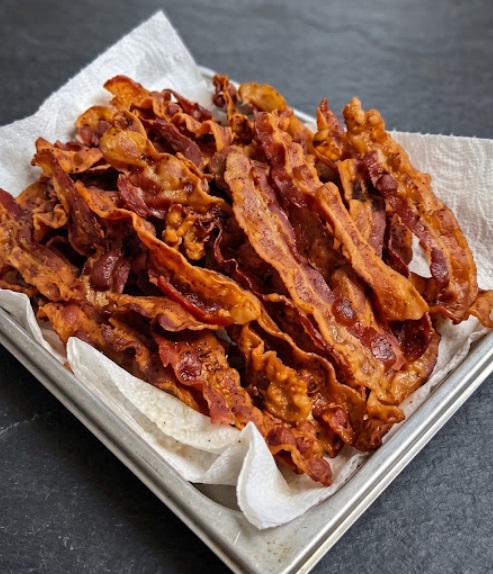
Perfectly crispy bacon doesn’t require special equipment or complicated techniques. The key is simple: start with a cold skillet, cook the bacon gradually, and let the fat render slowly.
This method gives you evenly browned bacon with crisp edges and plenty of savory flavor. Serve it with breakfast, add it to sandwiches and salads, or crumble it over your favorite dinner dishes.
Ingredients
8 slices thick-cut or regular-cut bacon
Freshly ground black pepper, optional
Maple syrup or brown sugar, optional for a sweet variation
You don’t need butter or cooking oil because bacon releases enough fat as it cooks.
Thick-Cut vs. Regular Bacon
- Both varieties work well, but they have slightly different textures.
- Regular-cut bacon cooks faster and tends to become very crisp.
- Thick-cut bacon takes longer and gives you a meatier slice with crisp edges and a little more chew.
How to Fry Bacon in a Skillet
- Start with a cold skillet: Place the bacon in a cold, dry skillet in a single layer. Slightly overlapping slices are fine because the bacon will shrink.
- Use medium-low heat: Place the skillet over medium-low heat and let the bacon cook gradually. A gentle sizzle is what you’re looking for.
- Cook the first side: Allow the bacon to cook for about 4–7 minutes, depending on its thickness.
- Once the underside is browned and the bacon begins to curl, flip it with tongs.
- Flip and finish cooking: Continue cooking until the second side is browned and the bacon reaches your preferred level of crispness. Total cooking time is usually about 8–15 minutes.
- Drain: Transfer the bacon to a plate lined with paper towels. Let it sit for a minute or two. It will continue to firm up as it cools.
- Serve: Serve warm or crumble the bacon over your favorite dishes.
Tips for Extra-Crispy Bacon
- Don’t overcrowd the skillet. Cook in batches if necessary.
- Avoid high heat, which can burn the bacon before the fat has rendered.
- Flip the bacon once or twice for more even browning.
- Watch closely during the final few minutes.
- Remember that bacon becomes crispier as it cools.
- If the grease starts smoking heavily, lower the heat or briefly remove the skillet from the burner.
How to Prevent Bacon From Curling
Some curling is natural, but you can reduce it by using a heavier skillet, cooking over moderate heat, flipping occasionally, and gently pressing the bacon down with tongs while it cooks.
Easy Flavor Variations
- Maple bacon: Brush lightly with maple syrup during the final minute, watching carefully because the sugar can burn.
- Brown sugar bacon: Sprinkle a small amount of brown sugar over the bacon before cooking.
- Pepper bacon: Add freshly cracked black pepper.
- Spicy bacon: Add a little cayenne or crushed red pepper.
Ways to Serve Crispy Bacon
Crispy bacon works well with:
Eggs, pancakes, waffles, and breakfast potatoes
BLTs, burgers, grilled cheese, and breakfast sandwiches
Caesar, Cobb, potato, and pasta salads
Baked potatoes and mashed potatoes
Mac and cheese
Green beans and Brussels sprouts
Pasta, casseroles, and soups
Can You Save Bacon Grease?
- Yes. Let the grease cool slightly, then strain it through a fine-mesh strainer into a clean, heat-safe container. Refrigerate it and use it later for cooking.
- Never pour hot bacon grease down the sink because it can cool and contribute to clogged plumbing.
Storage and Reheating
Cooked bacon can be refrigerated in an airtight container for 4–5 days. For longer storage, freeze it in a freezer-safe container or bag and use it within about 1 month for best quality.
To reheat, use a skillet over medium-low heat, a 350°F oven, an air fryer, or short microwave intervals. The skillet or air fryer can help restore some of the crisp texture.
Frequently Asked Questions
Should I start bacon in a hot or cold pan?
For this method, start with a cold pan. This allows the bacon fat to render gradually and helps the slices brown more evenly.
Do I need oil or butter?
No. Bacon releases its own fat during cooking.
Why isn’t my bacon crispy?
The skillet may be overcrowded, the heat may be too low, or the bacon may need more cooking time. Also remember that it becomes crispier as it cools.
Why does my bacon burn before becoming crispy?
The heat is likely too high. Lower the temperature and allow the bacon to cook more gradually.
Can I cook bacon ahead of time?
Yes. Refrigerate cooked bacon and reheat it when needed. It may lose some crispness, but reheating in a skillet or air fryer can improve the texture.
Final Thoughts
Crispy skillet bacon is one of those simple kitchen basics that becomes much easier once you know the right method. Starting with a cold skillet, cooking over moderate heat, and allowing the fat to render slowly gives you better control over the browning and texture.
With just bacon and a little patience, you can have crisp, golden slices ready for breakfast or to add flavor to almost any meal.