
How to Upcycle Plastic Milk Jugs for Your Garden and Patio
I’ve always found it hard to throw away a sturdy plastic milk jug when it still seems to have plenty of life left in it. Around the house and garden, simple materials can often serve another purpose with a little creativity.
Clean, empty milk jugs can be useful for all kinds of small outdoor projects, from garden labels to lightweight organizers for pots and gardening supplies. The best part is that you can reuse them without complicated tools or a long shopping list.
If you enjoy practical upcycling, here are a few easy ways to give plastic milk jugs a second life while keeping safety and durability in mind.
Why Reuse Plastic Milk Jugs?
Many milk jugs are made from high-density polyethylene, commonly marked with the recycling symbol 2. This plastic is widely used for household containers, but local recycling rules and accepted materials vary.
Before starting a project, check the recycling symbol on your container and your local recycling guidelines. Reusing a jug can be worthwhile, but recycling it through an accepted collection program is also a good option.
Materials You May Need
Depending on the project you choose, gather:
- Clean, empty plastic milk jugs
- Warm water and dish soap
- Permanent marker
- Ruler
- Scissors suitable for cutting plastic
- Fine sandpaper, if needed for smoothing rough edges
- Garden twine or suitable fasteners for your chosen project
Use only the materials needed for your specific project. Do not heat or melt household plastic containers to reshape them.
Project 1: Make Simple Garden Plant Labels
Garden labels are useful for keeping track of herbs, vegetables, and flowers.
Instructions
- Wash the milk jug with warm, soapy water and let it dry completely.
- Cut a flat section from the side of the jug.
- Trim the plastic into narrow strips with rounded or gently pointed ends.
- Check each label for sharp edges and smooth them carefully if necessary.
- Write the plant name on each strip with a marker that works on plastic.
- Place the labels in the soil beside the appropriate plants.
Keep the labels away from areas where children or pets might handle them unsupervised, and replace any pieces that become brittle or damaged.
Project 2: Create a Small Garden Organizer
A clean milk jug can be repurposed into a lightweight holder for small gardening items.
Instructions
- Wash and dry the jug thoroughly.
- Decide what you want to store, such as plant ties or small packets of seeds.
- Using scissors, carefully cut away a section of the upper side to create an opening.
- Smooth the cut edges so they are not sharp.
- Keep the organizer in a sheltered location and use it for lightweight, nonhazardous supplies.
Do not use a modified milk jug to store chemicals, food, drinking water, or anything that could be mistaken for its original contents.
Project 3: Make a Small Scoop for Garden Tasks
A sturdy jug can also become a simple scoop for dry potting mix or lightweight garden materials.
- Wash and dry the jug.
- Plan a handle and scoop shape that can be cut from the existing container.
- Cut slowly with suitable scissors, keeping your hands clear of the cutting path.
- Smooth the edges before using the scoop.
- Use it for lightweight, dry materials and replace it if the plastic cracks.
Avoid using the scoop for hot materials, food preparation, or products that may react with the plastic.
Important Safety Tips for Plastic Upcycling
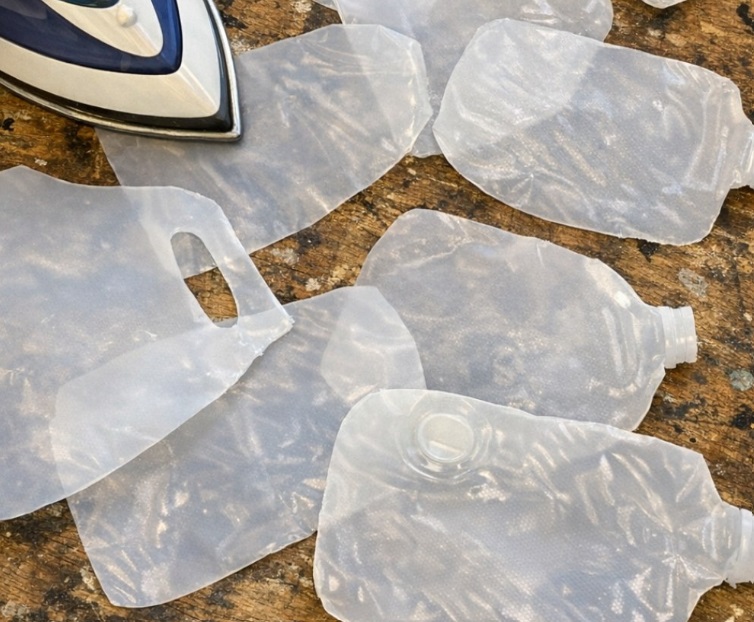
Avoid heating plastic with a household iron. The temperature and additives in household plastics can vary, and heating them may produce irritating or hazardous fumes. Do not assume that ventilation alone makes an untested melting process safe.
Check the plastic before cutting. Containers with cracks, brittle areas, or unknown contents are poor choices for reuse.
Protect your hands. Cut plastic slowly and carefully, and smooth sharp edges before handling the finished project.
Do not use improvised plastic panels as flooring. Cut or reshaped plastic may bend, move, become slippery when wet, or create trip hazards. A homemade panel should not be described as heavy-duty flooring without appropriate testing.
Keep upcycling materials clean. Wash containers before reuse, and do not repurpose chemical containers for gardening projects that involve edible plants.
Other Ways to Reuse Household Materials
If you want to make a patio or garden area more attractive, consider projects that do not require melting plastic:
- Use reclaimed bricks to outline a small planting bed.
- Place weather-resistant pots on a stable, level patio.
- Make garden labels from suitable reused materials.
- Repurpose a sound wooden crate to organize lightweight gardening supplies.
- Choose outdoor mats or modular patio tiles designed for the intended surface and conditions.
These options are more appropriate when stability, foot traffic, and exposure to rain or sunlight matter.
Final Thoughts
Reusing a plastic milk jug is a small way to make more use of something that might otherwise be discarded. Simple projects such as garden labels, scoops, and lightweight organizers can be inexpensive, practical, and enjoyable to make.
The key is choosing a second use that suits the material. Rather than heating household plastic or turning untested panels into a walking surface, stick with projects that can be made safely using basic tools.
A little creativity can give everyday items another purpose without making a project more complicated than it needs to be.