
I’ll admit it too — I’ve used safety pins for everything. Fixing a broken zipper five minutes before leaving the house. Securing a loose hem at an event. Even improvising when a button popped off at the worst possible moment. They’re one of those everyday essentials you toss in a drawer and never really think about.
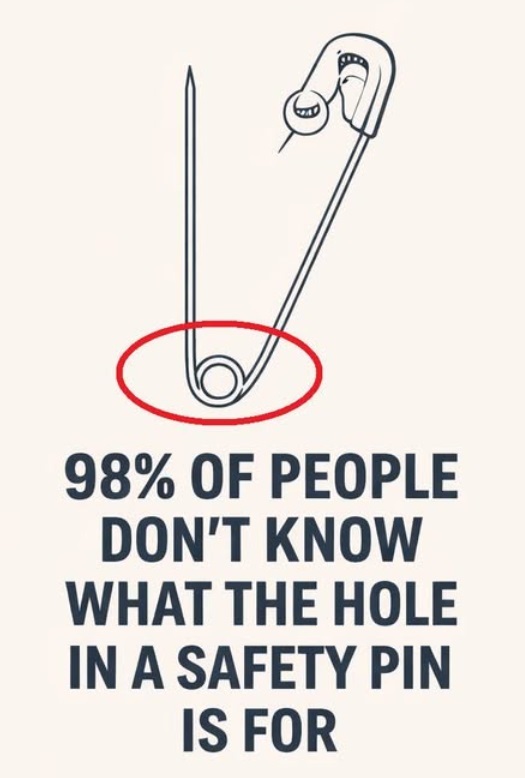
But then one day, I noticed that tiny hole at the end of the coil. You know the one. It’s so small and subtle that it feels decorative — like it’s just part of the shape. I had never questioned it. Not once.
Turns out, that tiny hole isn’t random at all. It’s a clever piece of engineering hidden in plain sight — and once you understand it, you’ll never look at a safety pin the same way again.
The Design of a Safety Pin (Quick Breakdown)
At first glance, a safety pin looks simple:
- A sharp metal point
- A protective clasp
- A coiled spring at one end
But that coil is where the magic happens.
The coiled section creates tension. That tension keeps the pin securely closed and allows it to snap back into place after being opened. Without it, the pin would be unstable and unreliable — not exactly what you want from something called a safety pin.
And right there in that coil? The tiny hole.
So What Is That Tiny Hole Actually For?
Here’s the fascinating part:
That hole is part of the spring mechanism and manufacturing process.
When the metal wire is formed into a safety pin, one end is anchored during production. The hole acts as a guide and stabilization point while the wire is twisted into that tight, tensioned coil. It helps ensure the coil is formed consistently and precisely.
But it’s not just a leftover from manufacturing.
The hole also helps maintain proper tension distribution in the coil. That tension is what allows the pin to:
- Snap closed reliably
- Retain its spring over time
- Avoid loosening or wobbling
Without that precise coil structure, the pin would lose stability and flexibility much faster.
In short: it’s tiny, but it’s essential.
Why This Small Detail Is Genius
✔ Ensures consistent spring tension
✔ Increases durability
✔ Supports precision manufacturing
✔ Keeps the pin stable and secure
✔ Maintains flexibility over time
For something so affordable and widely used, the engineering is surprisingly thoughtful.
It’s a great example of how everyday household items often hide smart design features we rarely notice.
Can You Actually Use the Hole for Anything?
Technically, yes — even though it wasn’t designed for this purpose.
Some creative uses include:
- Threading ribbon through the hole for crafts
- Anchoring the pin more securely in sewing projects
- Looping fine thread through it for embroidery stabilization
- Attaching it temporarily to prevent slipping
While these aren’t the original intent, they show how versatile simple tools can be.
FAQs About Safety Pins
- Does every safety pin have this hole?
Most standard coil-style safety pins do, though specialty designs may vary. - Is the hole necessary for the pin to work?
Yes — it plays a role in maintaining proper spring tension and structural stability. - Is it just leftover from manufacturing?
It begins as part of the manufacturing process but also contributes to long-term function. - Can the hole weaken the pin?
No. It’s part of the engineered design and does not compromise strength. - Why don’t manufacturers explain this feature?
Because it’s considered a built-in mechanical element rather than a user-facing feature.
The Bigger Lesson: Hidden Engineering in Everyday Tools
It’s kind of amazing how often we overlook the design brilliance in everyday objects. From simple fasteners to basic kitchen tools, many items rely on precise engineering to function smoothly.
The safety pin is a reminder that even the smallest details often serve a meaningful purpose. That little hole isn’t decorative. It’s structural. Intentional. Quietly brilliant.
And now that you know?
You’ll never unsee it.