
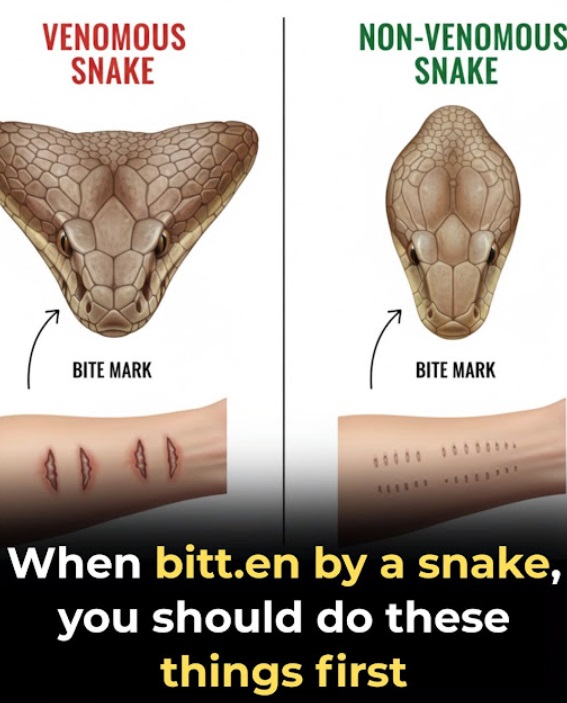
Snake bites are medical emergencies—but how you respond in the first minutes can make a critical difference. Most snake bites in the U.S. come from venomous species like rattlesnakes, copperheads, cottonmouths, or coral snakes. Even non-venomous bites can cause infection.
Here’s what doctors and poison control experts say to do immediately:
DO THIS FIRST: The 5 Critical Steps
1. Stay Calm & Call for Help
Call 911 or your local emergency number immediately—even if you feel fine.
Venom can take time to show effects. Do not wait for symptoms.
If in a remote area, get to a vehicle or call for rescue—do not hike out alone.
2. Keep the Bite Below Heart Level
Sit or lie down. Keep the bitten limb lower than your heart to slow venom spread.
Do not elevate it—this increases blood flow to the area.
3. Remove Tight Clothing or Jewelry Near the Bite
Swelling can be rapid and severe. Rings, watches, or tight sleeves may cut off circulation.
4. Clean Gently (If Possible)
Rinse with clean water to reduce infection risk—but do not scrub or soak.
5. Note the Snake’s Appearance (From a Safe Distance)
Do not try to catch or kill it—many second bites happen this way.
Remember color, pattern, and shape (e.g., “triangular head,” “rattle”) to help medical staff identify it.
What NOT to Do (Common Myths That Can Harm You)
- Do NOT cut the wound—increases infection and tissue damage.
- Do NOT suck out venom—ineffective and introduces bacteria.
- Do NOT apply ice or a tourniquet—can worsen tissue death.
- Do NOT drink alcohol or caffeine—speeds venom absorption.
- Do NOT take painkillers like aspirin or ibuprofen—they thin blood and increase bleeding risk.
At the Hospital
- Antivenom is the only effective treatment for venomous bites.
- Most U.S. hospitals stock antivenom for common regional snakes.
- Even “dry bites” (no venom injected) require observation for 6–12 hours.
Prevention Tips for Gardeners & Hikers
- Wear boots and long pants in snake-prone areas.
- Use a flashlight at night.
- Never reach into rock crevices or tall grass without looking.
- Teach children to leave snakes alone—most bites happen when people try to handle them.
Final Thought
“Fear makes us freeze—but knowledge gives us power.”
Most snake bites are survivable with prompt care. Your priority isn’t identifying the snake—it’s getting to help fast.
Stay calm, act quickly, and trust that modern medicine can take it from there.