
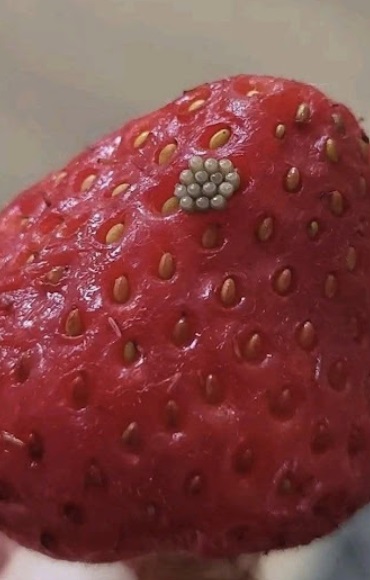
Strawberry “Worms”: What Are They and Are They Dangerous?
If you’ve seen the viral videos of strawberries placed in salt water and tiny white larvae crawling out, you may have wondered whether the fruit is safe to eat.
The videos can certainly be unpleasant, but there’s more to the story than the viral panic suggests.
What Are the Tiny “Worms”?
The larvae are commonly associated with the spotted-wing drosophila, a fruit fly that can lay eggs inside fresh, ripe soft fruit.
Unlike ordinary fruit flies, spotted-wing drosophila can penetrate the skin of ripe fruit and lay eggs beneath the surface. The eggs can develop into tiny larvae inside strawberries, raspberries, blueberries, cherries, and other soft fruits.
They’re not intestinal parasites, and accidentally eating a small fruit-fly larva isn’t generally considered a health hazard.
Does Salt Water Really Make Them Come Out?
A salt-water soak can sometimes encourage larvae near the surface to emerge, which is why the videos are so dramatic.
However, the viral claim that salt water guarantees that every larva will come out isn’t accurate. A soak may reveal some larvae, but it isn’t a reliable way to determine whether fruit is completely free of insects.
Soaking also isn’t necessary for making strawberries safe to eat.
What Happens If You Accidentally Eat One?
For most healthy people, accidentally consuming a tiny fruit-fly larva isn’t expected to cause illness.
The important distinction is between insect presence and food spoilage. Finding an occasional insect doesn’t automatically mean the fruit is dangerous.
However, strawberries that are moldy, rotten, leaking, slimy, or have an unpleasant fermented smell should be discarded.
What’s the Best Way to Wash Strawberries?
For everyday food safety, the simplest method is usually the best:
1. Rinse Under Running Water
Place the strawberries in a clean colander and rinse them thoroughly under cool, running water.
Gently rub the surfaces with your fingers to help remove dirt and other material from the skin.
2. Don’t Use Soap
Don’t wash strawberries with dish soap, bleach, or household cleaning products. These aren’t intended for cleaning food.
3. Wash Before Eating
It’s generally best to wash strawberries shortly before eating them rather than washing an entire container and storing the wet berries for days. Excess moisture can encourage spoilage.
4. Remove Spoiled Fruit
Discard strawberries that have visible mold or significant spoilage rather than trying to cut away a small affected section.
What About Baking Soda or Salt Water?
You may see recommendations for baking-soda or salt-water soaks online.
A salt-water soak can be used if you simply want to see whether larvae are present, but it’s not necessary for routine food safety and doesn’t guarantee that every larva will be removed.
Similarly, washing produce can reduce surface dirt and some residues, but no home washing method removes every pesticide residue or microorganism.
When Should You Throw Strawberries Away?
Don’t eat berries that have:
Fuzzy mold
Extensive soft or mushy areas
Slimy surfaces
Leaking juice
A sour, fermented, or foul smell
If only one strawberry in the container is moldy, it’s safest to discard the moldy fruit and carefully inspect the remaining berries.
The Bottom Line
Yes, those viral videos can look disgusting, but the presence of a tiny fruit-fly larva doesn’t mean your strawberries are poisonous or contaminated with human parasites.
For everyday eating, rinse your strawberries thoroughly under cool running water, keep them refrigerated, and discard berries that show signs of spoilage.
Nature isn’t perfectly sterile—and a little insect-related “ick” doesn’t have to keep you from enjoying fresh strawberries.