
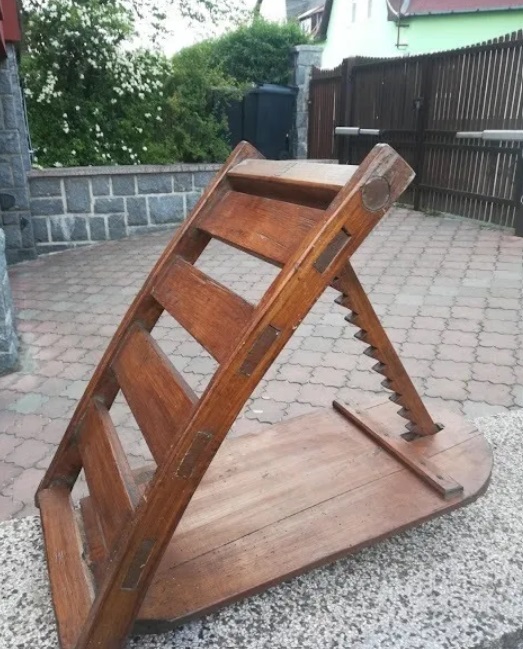
Finding an old wooden artifact can feel like opening a small window into the past. What may seem like a simple wooden object is often a piece of history that once played an important role in everyday life.
What Is It?
This artifact is believed to be a traditional wooden cheese press, a tool commonly used on farms and in rural households before modern food-processing equipment became available.
Cheese presses helped transform fresh milk curds into firm wheels of cheese by applying steady pressure over time. Farmers relied on tools like this to preserve food and make dairy products last longer.
How It Worked
Fresh curds were placed inside a mold lined with cheesecloth. The press then applied gentle pressure using a screw or lever mechanism. Over several hours, excess liquid (whey) drained away, leaving behind a compact cheese ready for aging.
This simple process helped families store nutritious food for weeks or even months.
Why Was It Made of Wood?
Hardwoods such as oak, maple, and beech were commonly used because they were strong, durable, and widely available. Skilled craftsmen often built these tools by hand using traditional woodworking techniques.
Many antique examples show signs of long-term use, including smooth surfaces, darkened wood, and natural wear patterns that developed over decades.
A Glimpse Into Everyday History
Before refrigerators and supermarkets, families often produced much of their own food. Milk from cows, goats, or sheep was turned into butter and cheese to prevent waste and extend shelf life.
Tools like this cheese press were once essential household equipment, reflecting a time when self-sufficiency and craftsmanship were part of daily life.
Identifying an Antique Cheese Press
Common features include:
- Solid hardwood construction
- Traditional joinery such as wooden pegs or mortise-and-tenon joints
- Dark patina from age and use
- Evidence of pressure mechanisms such as screws or levers
- Natural wear consistent with food preparation
Historical and Collectible Value
Antique cheese presses are valued by collectors, museums, and history enthusiasts because they represent traditional food-production methods. Their significance often lies more in their historical story and craftsmanship than in their monetary value.
Preserving the Artifact
To maintain its condition:
- Dust gently with a soft cloth or brush
- Avoid harsh cleaning chemicals
- Keep it away from excessive moisture
- Store or display it in a stable indoor environment
- Avoid sanding or refinishing original surfaces
Final Thoughts
A wooden cheese press is more than an old tool. It represents a period when food preparation required patience, skill, and practical knowledge passed from one generation to the next.
Whether displayed as a decorative piece or studied as a historical artifact, it offers a fascinating reminder of how people lived, worked, and preserved food long before modern conveniences became part of everyday life.