
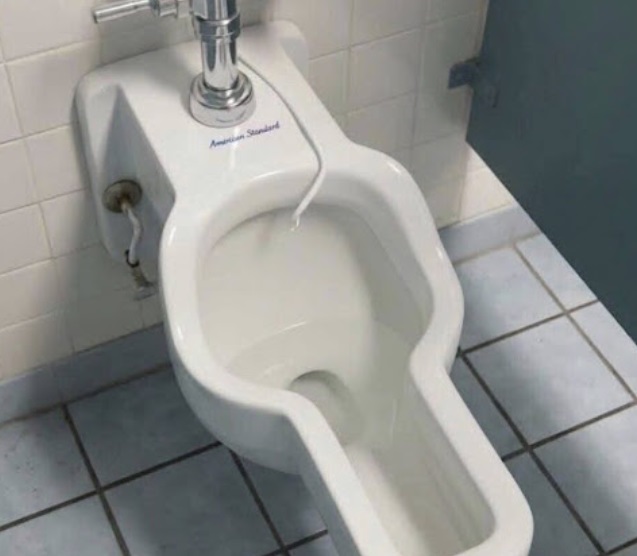
Female Urinals: What Are They and Why Are They Used?
If you’ve ever noticed an unusual urinal-style fixture in a women’s restroom, you may have wondered what it is and why it’s there.
Female urinals are fixtures designed to allow women to urinate while standing or in a semi-standing position. They are intended to provide an alternative to traditional seated toilets in certain public facilities.
What Does a Female Urinal Look Like?
These fixtures are generally designed with a wider basin and a shape intended to accommodate the user’s position.
Depending on the model, they may include:
A wide, shallow basin
Splash protection
Minimal-contact or touch-free flushing
Instructions showing the recommended position
The exact design varies between manufacturers and facilities.
Why Are They Being Considered?
Several practical reasons have contributed to interest in female urinals.
Less Contact With Shared Surfaces
Because the user does not need to sit on a toilet seat, the fixture can reduce direct contact with that particular surface.
However, cleanliness still depends heavily on proper maintenance and regular cleaning. No restroom fixture is automatically hygienic simply because of its design.
Faster Use
Traditional restroom stalls require users to enter, close the door, use the toilet, and leave. A urinal-style fixture can potentially require less space and less time for certain users.
This can be particularly useful in busy public facilities where restroom lines become long.
Water and Space Efficiency
Some urinal-style fixtures are designed to use less water than conventional toilets, although water consumption varies considerably by model.
They may also require less floor space than a complete toilet stall, making them an option for facilities where space is limited.
Additional Choice
Female urinals are not intended to replace traditional toilets. They can simply provide another option for people who are comfortable using them.
Are Female Urinals Hygienic?
They can be hygienic when properly designed, installed, and maintained.
One potential advantage is reduced contact with a toilet seat. However, hygiene also depends on cleaning schedules, correct use, ventilation, and general restroom maintenance.
It’s therefore better to think of female urinals as another type of restroom fixture, rather than automatically assuming they are cleaner than conventional toilets.
How Are They Used?
The exact instructions depend on the design.
If you encounter one:
Read any instructions provided by the facility.
Position yourself according to the fixture’s design.
Take care to align yourself properly to reduce splashing.
Use the flush mechanism if one is provided.
Wash your hands afterward.
If you’re uncomfortable using the fixture, you can simply use a traditional toilet if one is available.
Where Are They Found?
Female urinals have been tested or used in some public facilities, temporary events, and locations where reducing restroom queues or saving space is a priority.
Their availability varies considerably from one country and facility to another, and they are still far less common than conventional toilets in many places.
Frequently Asked Questions
Are female urinals replacing normal toilets?
Generally, no. They are designed as an additional option rather than a universal replacement for seated toilets.
Are they suitable for everyone?
Not necessarily. People have different mobility needs, clothing considerations, and personal preferences. Providing multiple restroom options is therefore important.
Do female urinals save water?
Some models can use less water than conventional toilets, but the actual amount depends on the specific fixture and flushing system.
Are they difficult to use?
There can be a short learning curve for someone who has never used one. Clear instructions and proper positioning can make the experience easier.
The Bottom Line
Female urinals are an alternative restroom fixture designed around standing or semi-standing use. Interest in them is connected to practical considerations such as space, restroom capacity, water use, and reduced contact with toilet seats.
They aren’t necessarily the right choice for everyone, but they can provide another option in certain public facilities.
As restroom design continues to evolve, fixtures like these show how public spaces can experiment with different approaches to comfort, efficiency, accessibility, and resource use.