
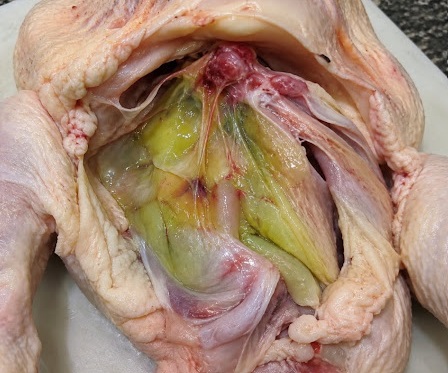
Why Is My Chicken Green Inside? What That Strange Color Means
Have you ever cut into a chicken breast that looked completely normal on the outside, only to find a strange green patch inside? It can be surprising enough to make you stop cooking dinner and wonder if the chicken has gone bad.
A green or greenish-gray area in chicken can have more than one explanation. One possibility is deep pectoral myopathy, sometimes called green muscle disease. It can cause a localized green color in the deeper breast muscle and isn’t the same thing as ordinary bacterial spoilage.
Still, green chicken shouldn’t automatically be considered safe. The color is only one part of the picture, so it’s important to check the smell, texture, storage history, packaging, and other signs before deciding what to do.
What Causes Green Meat in Chicken?
Green discoloration can happen for several reasons, including deep pectoral myopathy, bruising or muscle damage, and spoilage.
Green Muscle Disease
Deep pectoral myopathy is a condition that affects a deeper breast muscle in chickens. When blood flow to the muscle becomes restricted, the tissue can become damaged and develop a greenish color. Because the affected muscle is located deeper inside the breast, you may not notice anything unusual until you cut into the chicken.
The important thing to understand is that this type of discoloration isn’t necessarily caused by bacteria making the meat green.
Does Green Chicken Mean It’s Spoiled?
Not necessarily.
A localized green area caused by deep pectoral myopathy is different from the changes associated with ordinary spoilage. However, you can’t reliably determine the cause from color alone.
Before using chicken with an unusual appearance, consider:
Does it have a strong or unpleasant odor?
Is the surface unusually slimy or sticky?
Has it been refrigerated properly?
How long has it been stored?
Is the package damaged or leaking?
Are there other unusual changes in the meat?
If you’re unsure about raw chicken, the safest choice is to throw it away or contact the retailer or manufacturer.
What Does Green Muscle Disease Look Like?
The discoloration can appear in different ways. You might notice:
A green or greenish-gray patch inside the breast
A narrow green streak
Discoloration deeper inside the meat
A localized area that looks different from the surrounding muscle
The affected area may also have a different texture. A green patch deep inside an otherwise fresh-looking chicken breast can be consistent with deep pectoral myopathy, but a photograph or color alone cannot confirm the cause.
What If the Chicken Smells Bad?
That’s a much bigger concern.
If the chicken has a strong unpleasant odor, a slimy or sticky texture, widespread unusual discoloration, damaged packaging, or a questionable storage history, don’t try to save it by cooking.
Cooking poultry properly is important, but cooking isn’t a way to make spoiled food safe.
Can Bruising Make Chicken Look Green?
Yes, unusual colors can sometimes develop when poultry has been bruised or the tissue has been damaged.
Bruised areas may appear red, purple, blue, brown, or green as blood pigments break down and the damaged tissue changes over time. A localized area of discoloration isn’t automatically the same thing as bacterial spoilage.
If you’re not sure what caused the discoloration, however, it’s better to be cautious.
What If Chicken Turns Green After Cooking?
Chicken can sometimes develop unexpected colors during cooking because of chemical reactions involving pigments and the cooking environment. But color alone isn’t a reliable way to determine whether chicken is safely cooked.
For food safety, use a food thermometer. Chicken should reach an internal temperature of 165°F (74°C) in the thickest part of the meat.
If cooked chicken has an unpleasant odor, slimy texture, or other obvious signs that something is wrong, don’t eat it.
Green Chicken vs. Spoiled Chicken
A simple way to think about the difference is this:
Possible Green Muscle Disease
Localized green discoloration
Often found deeper inside breast meat
May occur without a foul odor
Associated with muscle damage
Not the same thing as bacterial spoilage
Possible Spoilage
Strong unpleasant odor
Slimy or sticky texture
Widespread unusual discoloration
Damaged or leaking packaging
Improper storage
Chicken that has been kept too long
These signs don’t provide a diagnosis, but they can help explain why green color alone doesn’t tell the whole story.
Should You Cut Off the Green Part?
I wouldn’t recommend simply cutting away the green area and assuming the rest is safe.
At home, you generally can’t confirm why the chicken has turned green. If there are other signs of spoilage, discard the entire piece.
If the chicken was recently purchased and otherwise appears fresh but has an unexpected green section, consider contacting the store or manufacturer. Keeping the packaging and taking a photo can also be helpful if you decide to report the issue.
How to Handle Chicken Safely
Whether your chicken looks completely normal or has an unusual color, basic food-safety practices still matter.
Keep Chicken Cold
Refrigerate raw chicken promptly. If you aren’t planning to use it soon, freeze it.
Avoid Cross-Contamination
Keep raw chicken away from foods that won’t be cooked. Wash your hands thoroughly after handling raw poultry and use separate cutting boards when practical.
Don’t Wash Raw Chicken
Washing raw chicken can spread contaminated droplets around your sink and kitchen. Rinsing doesn’t make chicken safer; proper cooking is what kills harmful bacteria.
Cook Chicken Thoroughly
Use a food thermometer and make sure the thickest part reaches 165°F (74°C). Don’t rely only on whether the center looks pink or white.
Store Leftovers Properly
Refrigerate cooked chicken promptly in shallow containers and keep it properly chilled. If leftovers have been left at room temperature for too long, it’s safer to discard them.
Final Thoughts
Finding green meat inside a chicken breast can definitely be unsettling, but the color doesn’t automatically mean the chicken has spoiled.
One possible explanation is deep pectoral myopathy, which can cause green discoloration in the deeper breast muscle without being the same thing as ordinary bacterial spoilage. At the same time, you shouldn’t assume every green piece of chicken is harmless.
Look at the bigger picture: the smell, texture, storage history, packaging, and overall condition. And if something doesn’t seem right, it’s better to throw the chicken away than take a chance with food safety.
When it comes to raw poultry, when in doubt, play it safe.