
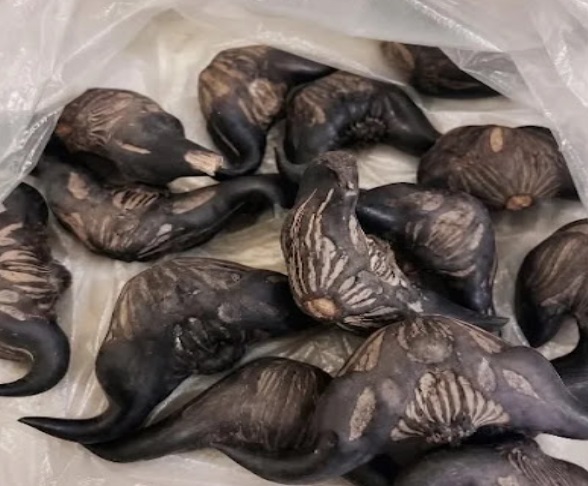
What Are Water Caltrops? The Strange Horned Fruit You May Have Seen
Have you ever come across a bowl of dark, horned fruits that looked more like tiny creatures or medieval objects than something you’d actually eat?
Those unusual fruits are water caltrops, and underneath their hard, pointed shells is a pale, starchy seed that has been eaten in parts of Asia and Europe for generations.
Water caltrops come from aquatic plants in the genus Trapa. They’re especially interesting because they have an unusual appearance, a long culinary history, and a few important food-safety considerations that are worth knowing before you try them.
What Are Water Caltrops?
Water caltrops are the fruits of aquatic plants belonging to the genus Trapa. Depending on the species and region, they may also be called water nut, buffalo nut, singhara, or singhara nut.
The plants grow in freshwater environments, with floating leaves that form a rosette on the surface. The fruit develops underwater and produces a hard shell with distinctive pointed projections.
Inside that unusual shell is a pale, firm, starchy seed. That’s the edible part.
What Do Water Caltrops Look Like?
Water caltrops are hard to mistake once you’ve seen them.
The Color
Mature fruits are commonly dark brown to nearly black, which makes the pale seed inside especially striking.
The Shell
The outer shell is hard and woody, with pointed projections that are part of the fruit’s natural structure.
Depending on the species, the fruit may have two, three, or four prominent projections. Trapa natans, for example, can produce two- to four-horned fruits.
Why Are They Called Water Caltrops?
The name comes from an old spiked military device called a caltrop.
A traditional caltrop was a small metal object with several sharp points arranged so that at least one point would face upward when it landed. The unusual shape of the Trapa fruit reminded people of these objects, giving the plant its memorable English name.
A Food With a Long History
Water caltrops aren’t a new food discovery. Different Trapa species have been gathered and eaten for centuries.
In parts of Asia, the edible seeds have traditionally been boiled, cooked, dried, or ground into flour. In India, water caltrops are commonly known as singhara, and singhara flour is used in various traditional foods.
The plant also has a long history in Europe, with Trapa natans having a broad Old World distribution.
What Do Water Caltrops Taste Like?
Don’t expect a juicy or sweet fruit.
The edible seed is generally mild, firm, and starchy, with a relatively subtle flavor. Depending on how it’s prepared, it can work in both savory dishes and some sweeter preparations.
The texture may remind some people of other cooked starchy seeds, although water caltrops have their own distinct character.
How Are Water Caltrops Traditionally Prepared?
There are several traditional ways to prepare them.
Boiling
The whole fruits can be cooked until the interior becomes tender. Once they have cooled enough to handle, the hard shell is removed and the edible seed is eaten.
Further Cooking
The cooked seed can be added to other dishes with vegetables, spices, or other ingredients.
Drying and Grinding
Dried seeds can be ground into singhara flour, which is used in traditional recipes such as flatbreads and other flour-based foods.
How Do You Open a Water Caltrop?
The shell is genuinely hard, so opening one requires more care than opening an ordinary fruit.
Cook it first when following a traditional cooked preparation.
Let it cool enough to handle safely.
Carefully crack or cut the shell to access the seed.
Remove the pale interior and discard any damaged or questionable portions.
Refrigerate the cooked seed promptly if you aren’t eating it right away.
Because of the sharp projections and hard shell, take your time when opening them.
Are Water Caltrops Safe to Eat Raw?
This is an important point.
The CDC warns that inadequately cooked water caltrops can transmit the intestinal parasite Fasciolopsis buski, which can cause fasciolopsiasis. Because these fruits grow in freshwater environments, their preparation deserves particular attention.
For that reason, if you’re unfamiliar with the source or preparation method, thorough cooking is the safer choice rather than eating freshly collected water caltrops raw.
Washing them alone shouldn’t be considered a substitute for proper preparation.
If you’re collecting aquatic plants yourself, correct identification, water quality, local regulations, and food-safety guidance all matter.
What Is Singhara?
Singhara is a common name for water caltrop, particularly in South Asian food traditions.
The name can also refer to the flour made by drying and grinding the edible seeds. Singhara flour is used in a variety of traditional preparations and is especially familiar in some Indian culinary traditions.
How Are Water Caltrops Used in Cooking?
Once properly prepared, the edible seed can be used in several ways.
As a cooked snack: The mild seed can be eaten on its own with simple seasoning.
In traditional Indian cooking: Singhara flour is used in various regional recipes.
In flour-based dishes: Dried seeds can be ground into flour.
In savory dishes: Cooked seeds can be combined with vegetables, spices, and other ingredients.
Final Thoughts
Water caltrops may look like something from a completely different world, but they’ve been part of traditional food cultures for generations.
Behind that dark, horned shell is a pale, starchy seed that can be boiled, cooked, or dried and turned into flour. Their unusual shape, fascinating name, and long culinary history make them one of those foods that are hard to forget once you’ve seen them.
The most important thing is to know what you’re eating and where it came from. With aquatic and wild foods, proper identification and preparation matter just as much as the recipe.
So the next time you see those strange little horned fruits, you’ll know that you’re looking at a water caltrop—not a Chinese water chestnut—and there’s a surprisingly long story behind that unusual shell.