
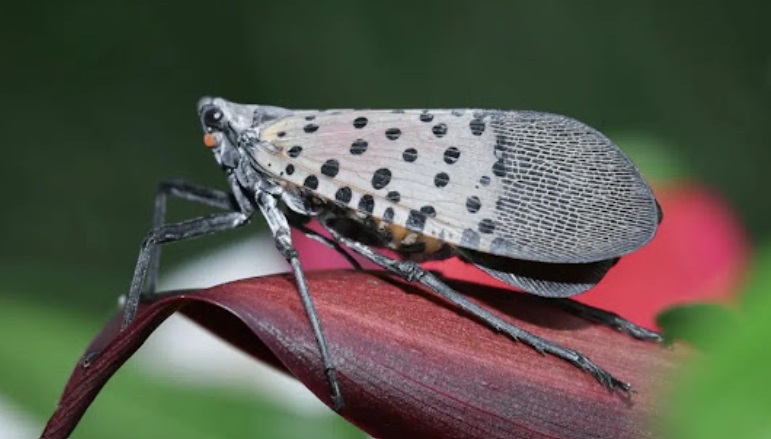
I really didn’t think I’d end up squashing anything that day. It was hot, I was wearing the same pair of gardening shorts I always end up regretting, and I had just gone out to water my beloved maple tree. And that’s when I saw it. This bug. A lanternfly. Just sitting there on the bark like it paid rent.
At first, I thought it was kind of cute. Gray wings, tiny black dots, and then it fluttered open to reveal this brilliant, shocking red underneath—like a magic trick. A flashy little punk. I got closer, took a picture, and Googled it. And that’s exactly when things went from “ooh, pretty” to “get it off my property immediately.”
If you’ve ever encountered this striking insect in your yard, you might have been fooled by its beauty. But make no mistake: the Spotted Lanternfly is an invasive nightmare. Here is everything you need to know about this flashy invader, the gross damage it causes, and exactly how to evict it from your garden.
The Invader: What is the Spotted Lanternfly?
They call it a lanternfly, but that’s a bit misleading. It doesn’t light up or glow in the dark. What it does do, however, is suck the life out of your favorite plants. Literally.
This insect is native to parts of China, India, and Vietnam. It arrived in the United States uninvited—most likely hitching a ride on a stone shipment or shipping container—and was first discovered in Pennsylvania in 2014. Since then, it has been creeping through the East Coast, spreading rapidly with no natural predators to keep its population in check.
Before you say, “But bugs are part of nature!” you’re right. But this specific bug is an invasive species that ruins ecosystems, devastates agricultural crops, and turns beautiful backyards into sticky, moldy messes. It is quite literally a bug that hates joy.
The Damage: Why It’s a Nightmare for Your Plants
The Spotted Lanternfly doesn’t nibble, chomp, or chew on your leaves. No, it has a much more destructive method. It pierces.
It possesses a long, straw-like mouthpart that it jabs deep into the stems and trunks of trees to suck out the nutrient-rich sap. But the real gross factor comes next. As it feeds, it excretes a massive amount of a sugary, sticky waste called honeydew.
The “Honeydew” Disaster:
You’d think “honeydew” sounds like a good thing. It’s not. It’s essentially bug barf.
The Sticky Mess: It coats your patio furniture, your car, and the ground beneath the tree in a thick, sticky film.
Sooty Mold: That sugary goop acts as a magnet for a fungus called sooty mold. This black, powdery mold grows over the honeydew, suffocating the plant’s leaves and blocking out the sun they need for photosynthesis.
The Result: Within just a few weeks, the leaves on your once-beautiful maple or grapevine can look like they’ve been dragged through a charcoal grill. The plant weakens, stops producing fruit, and can eventually die.
How to Identify the Spotted Lanternfly
Early Nymphs (Late Spring to Early Summer)
These young lanternflies are tiny (about 1/4 inch long), wingless, and black with bright white spots. They often gather in groups on plants and tree trunks.
Late Nymphs (Mid-Summer)
As they mature, they grow to about 1/2 inch long and develop a bright red body with black and white spots. They are still wingless but much easier to spot because of their vivid coloring.
Adults (Late Summer to Fall)
Adult spotted lanternflies are about 1 inch long with gray forewings covered in black spots. When they open their wings or take flight, they reveal bright red hindwings with black spots that fade into white and black near the tips.
Egg Masses (Fall to Winter)
Egg masses resemble small patches of dried gray or brown mud smeared onto surfaces such as:
Tree trunks and branches
Outdoor furniture
Fences
Rocks
Vehicles and trailers
Each egg mass can contain dozens of eggs, making early detection important.
Quick Identification Tip
One of the easiest ways to recognize an adult spotted lanternfly is its sudden flash of bright red wings when it jumps or flies. If you notice this distinctive red flash in your yard or garden, take a closer look—it could be a spotted lanternfly. Keeping an eye out for all life stages can help with early detection in areas where this invasive insect is established.
How to Get Rid of Them (The Action Plan)
Because they are an invasive species with no natural enemies in the U.S., it is up to us to protect our trees and crops. Here is how to take back your yard.
1. The “Circle Method” (Stomping)
For a few rogue adults or nymphs, the most effective and immediate method is physical removal.
How to do it: Draw a circle around the bug with your foot, then step firmly on it. Squishing them is highly effective. (Yes, it leaves a red stain, so wear shoes you don’t mind getting dirty!)
2. Scrape the Egg Masses
If you want to stop next year’s infestation before it starts, look for egg masses in the late fall and early spring.
How to do it: Use a plastic scraper or a dull putty knife to scrape the egg masses off trees, fences, or outdoor furniture. Drop them into a baggie filled with hand sanitizer or rubbing alcohol to destroy them.
3. Remove the “Tree of Heaven”
The Spotted Lanternfly’s absolute favorite host plant is the Tree of Heaven (an invasive weed tree itself).
How to do it: If you have this tree on your property, consider having it removed. If you must keep it, it can be used as a “trap tree” by applying systemic insecticides to it, which will kill the lanternflies when they feed on it.
4. Use Sticky Bands (With Caution!)
You can wrap the trunks of your favorite trees (like maples or fruit trees) with sticky tape to catch the nymphs as they crawl up.
The Catch: Standard sticky traps will also catch birds, bats, and beneficial insects. Always cover the sticky tape with a wire mesh or hardware cloth (like a little cage) so only the bugs can get through, keeping wildlife safe.
Frequently Asked Questions
Q: Do Spotted Lanternflies bite or sting humans?
A: No! They do not have mouthparts designed to bite or sting humans, and they are not venomous. They are strictly interested in plant sap. They are also not known to harm pets.
Q: Why can’t we just let nature take its course?
A: Because they are invasive! In their native habitat, local predators and parasites keep their numbers in balance. Here, they have no natural enemies, meaning their population can explode and decimate local agriculture, vineyards, and hardwood forests.
Q: Will my neighbor’s lanternflies fly into my yard?
A: Yes. Spotted Lanternflies are actually not very strong fliers, but they are excellent hitchhikers. They will jump onto cars, trucks, and firewood, allowing them to travel miles in a single day. This is why community-wide efforts are so important.
Q: Should I report them if I see them?
A: Absolutely. If you spot them in a state where they are not yet fully established, report them to your state’s Department of Agriculture. Many states have online portals or hotlines where you can submit a photo and your location to help track their spread.
A Compassionate Closing Thought
If you are reading this because you just spotted a flashy red-and-gray bug on your favorite tree and your heart sank a little—please know that your frustration is completely valid.
Your garden is your sanctuary. Whether it’s a sprawling backyard or a few potted plants on a balcony, the green spaces we tend to are extensions of our own peace. Protecting them from invaders is a labor of love, and it’s okay to feel fiercely protective of the life you’ve cultivated.
You are not alone in this fight. Millions of gardeners, farmers, and nature lovers are dealing with the exact same invader. By taking action in your own yard, you are contributing to a massive, collective effort to protect our local ecosystems.
Nature is resilient, but it needs our help. While it’s hard to see our trees covered in sticky sooty mold, trees are incredibly strong. With a little bit of intervention, some soapy water to wash off the honeydew, and the removal of the pests, your garden can and will bounce back.
Every little bit counts. You don’t have to eradicate every single bug to make a difference. Stomping a few nymphs, scraping an egg mass, or simply being aware of what to look for makes you a steward of your local environment.
That flashy little punk on your maple tree might be a nuisance, but your response to it is a testament to your care for your home.
So, put on your gardening shoes.
Grab your scraper.
Take a deep breath of the fresh air.
And take back your garden, one squashed bug at a time. You’ve got this.
Have you battled the Spotted Lanternfly in your yard? What methods have worked best for you to protect your trees and plants? Share your gardening victories and pest-control tips respectfully in the comments below.