
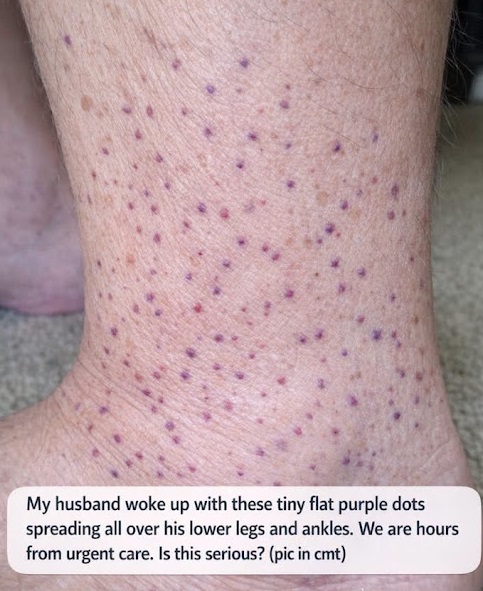
Tiny Purple Spots on Your Legs: What They May Mean
Noticing tiny purple or red spots on your legs or ankles can be concerning, especially when they appear suddenly. While some skin changes have minor causes, others may require medical attention.
One possible cause is petechiae, tiny, flat spots that develop when small blood vessels leak blood beneath the skin. They may appear red, purple, or reddish-brown and generally do not fade when pressed. However, not every purple spot is petechiae, and appearance alone cannot identify the cause.
1. What Do Petechiae Look Like?
Petechiae are usually tiny, flat marks that may appear individually or in clusters. They commonly occur on the legs, ankles, and feet, but can develop elsewhere on the body.
Unlike many ordinary rashes, petechiae generally do not fade when pressure is applied. A glass test may help you observe this, but it cannot diagnose the condition or rule out a serious illness.
2. What Can Cause Tiny Purple Spots?
Several conditions can cause bleeding beneath the skin, including:
- Physical strain: Forceful coughing, vomiting, heavy lifting, or significant pressure can sometimes cause small blood vessels to rupture.
- Medication effects: Some medicines, including aspirin, certain anti-inflammatory drugs, and blood thinners, can affect bleeding.
- Low platelet counts or clotting problems: These may also cause unexplained bruising, nosebleeds, or bleeding gums.
- Infections: Some viral and bacterial infections can cause petechiae, occasionally alongside serious illness.
- Other medical conditions: Inflammation of blood vessels and certain blood or immune-related disorders may also be responsible.
The location of the spots alone cannot establish their cause. New spots that spread, increase in number, or appear alongside unexplained bruising deserve particular attention.
3. When Should You Seek Medical Help?
Seek emergency medical care immediately if a new non-blanching rash occurs with symptoms such as:
- Fever with a severe headache or stiff neck
- Confusion, unusual drowsiness, or difficulty waking
- Trouble breathing or rapid deterioration
- Fainting, severe weakness, or cold, clammy skin
- Rapidly spreading purple spots, especially when the person feels unwell
A serious infection can progress quickly, and you should not wait for every warning sign to appear.
If you feel well but develop new, unexplained, spreading spots that do not fade under pressure, arrange urgent medical assessment. Do not rely on a home test to decide that the rash is harmless.
4. What Should You Do First?
If you notice unexplained purple spots:
- Check for fever, dizziness, unusual bleeding, or other new symptoms.
- Observe whether the spots are spreading or appearing elsewhere.
- Take a photograph in good lighting to document changes, provided this does not delay medical care.
- Make a note of recent illnesses, medication changes, and unusual bruising.
- Seek medical advice promptly, especially if the spots are new or spreading.
Do not start creams or medicines specifically to treat the spots without appropriate advice. If emergency warning signs appear, seek help immediately.
5. How Are Petechiae Treated?
Treatment depends on the underlying cause. A healthcare professional may examine the skin, review medications and recent illnesses, and order blood tests to check platelet levels or blood-clotting function when appropriate.
There is no single cream that treats petechiae themselves. Identifying the cause is more important than treating the skin’s appearance.
Frequently Asked Questions
Are petechiae always dangerous?
No. They can sometimes follow physical strain, but they may also indicate infection or a blood-related problem. New, unexplained, or spreading spots should not be ignored.
Can petechiae disappear on their own?
They may fade as the body reabsorbs the blood beneath the skin. However, fading does not prove that the underlying cause was harmless.
Do petechiae itch or hurt?
They are often neither itchy nor painful. The absence of discomfort does not rule out a serious cause.
Can the glass test tell me whether a rash is serious?
No. It is not a diagnostic test, and some serious rashes may fade under pressure. Consider the person’s overall condition and seek medical care when needed.
Final Thoughts
Tiny purple spots on the legs can have several causes, ranging from minor physical strain to medical conditions that need prompt treatment. Pay attention to whether the spots are spreading and whether other symptoms are present.
If the rash is accompanied by emergency warning signs, seek immediate medical care. For new, unexplained spots, professional assessment is safer than relying on appearance alone.
This article is for general educational purposes and does not replace professional medical advice, diagnosis, or treatment.