
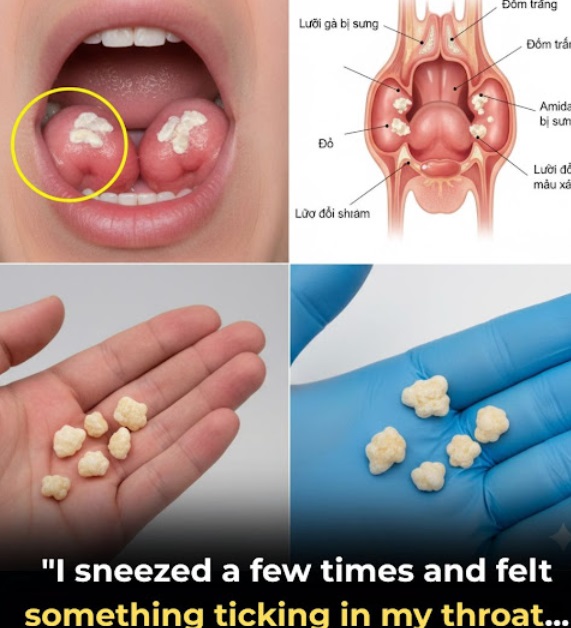
Tonsil stones—also called tonsilloliths—are small, hard lumps that form in the crevices (crypts) of your tonsils. They’re more common than you think and usually harmless, but they can cause bad breath, discomfort, or a feeling that something’s stuck in your throat.
What Are Tonsil Stones?
Composition: Made of calcified debris—dead cells, mucus, food particles, and bacteria that get trapped in tonsil crypts and harden over time.
Appearance: White or yellowish, ranging from grain-of-rice size to pea-sized.
Smell: Often have a strong, foul odor due to sulfur-producing bacteria—this is a leading cause of chronic bad breath (halitosis).
Common Causes & Risk Factors
Chronic tonsillitis or large, deep tonsil crypts
Poor oral hygiene
Dry mouth (reduces natural cleansing from saliva)
Post-nasal drip (excess mucus feeds stone formation)
Diet high in dairy or refined sugars (can increase mucus and bacterial growth)
Symptoms (Not Everyone Has Them!)
Many people have tonsil stones with no symptoms at all. When present, signs include:
Persistent bad breath that brushing doesn’t fix
Feeling of something “stuck” in the back of the throat
Sore throat or ear pain (referred pain from shared nerves)
Visible white spots on tonsils
Mild swallowing discomfort
Safe Ways to Remove or Prevent Them
At-Home Care:
Gargle with warm salt water (1/2 tsp salt in 1 cup water)—loosens debris and reduces bacteria.
Use a soft toothbrush or cotton swab to gently dislodge visible stones (be very gentle—don’t poke deeply).
Water flosser on low setting—can flush out crypts (use carefully!).
Stay hydrated—keeps mouth moist and washes away debris.
Practice good oral hygiene: Brush teeth, tongue, and gums twice daily; floss regularly.
When to See a Doctor:
Stones are large, painful, or recurrent
You have chronic bad breath despite good hygiene
You experience frequent tonsillitis (more than 4–5 episodes/year)
You’re unsure if it’s a stone (could be strep, abscess, or other issue)
Never use sharp objects (like bobby pins or picks)—you risk injury or infection.
Medical Treatments (For Severe Cases)
Antibiotics: May reduce bacteria temporarily—but don’t prevent recurrence.
Cryptolysis: Laser or radiofrequency treatment to smooth tonsil surfaces.
Tonsillectomy: Removal of tonsils—considered only for severe, chronic cases.
Final Thought
Tonsil stones are annoying but rarely serious. Most respond well to simple hygiene and hydration.
“Your mouth is a garden—tend it gently, and it will bloom.”
If bad breath or throat discomfort persists, talk to your dentist or ENT—they can help you find lasting relief.