
Engaging Introduction
There’s nothing more disappointing than bringing home a beautiful piece of fruit—only to cut it open and find it’s mealy, flavorless, or already rotting from the inside out.
We’ve all been there. That rock-hard avocado that never ripens. The peach that looked perfect but tasted like cardboard. The watermelon that was watery and bland.
I used to be a terrible fruit picker. I’d stand in the produce section, squeezing avocados, sniffing melons, and praying for the best. Half the time, I got it wrong.
Then I worked briefly at a farmers market and learned the secrets that fruit growers and grocers use to pick the best produce. It’s not luck. It’s not magic. It’s science and observation.
Here’s everything I’ve learned about picking the best fruits at the grocery store—so you can stop wasting money and start enjoying delicious, perfectly ripe fruit.
The Golden Rules (Apply to Almost All Fruits)
Before we dive into specific fruits, let me give you a few universal principles.
1. Use your senses. Touch, smell, and sight. A fruit’s appearance, firmness, and aroma are the best indicators of ripeness.
2. Avoid bruises, cuts, and soft spots. These indicate damage or internal rot.
3. Don’t judge by color alone. Color can be misleading. Some fruits are dyed, gassed, or picked early to look ripe when they’re not.
4. Know your seasons. Fruits that are in season (grown locally) are almost always better than those shipped from far away.
5. When in doubt, smell it. A ripe fruit should have a sweet, fragrant aroma. If it smells like nothing, it probably tastes like nothing.
How to Pick Specific Fruits
Let me walk you through the most common fruits.
Avocados
What to look for: A dark, bumpy skin (for Hass avocados). Gently press the stem end. If it yields slightly, it’s ripe. If it’s hard as a rock, it needs more time. If it’s mushy, it’s overripe.
The stem trick: Pop off the small stem at the top. If the flesh underneath is green, it’s good. If it’s brown, it’s overripe.
The shake test: If you hear the pit rattling inside, it’s overripe.
Pro tip: Buy avocados at different stages. Use the ripe ones today, leave the firmer ones on the counter for later, and refrigerate the rest.
Bananas
What to look for: Bright yellow with few or no brown spots means ready to eat now. Green with no yellow means needs several days. Lots of brown spots means very sweet (perfect for baking).
The stem test: If the stem is still green, the banana was picked recently. If it’s brown, it’s been sitting longer.
Pro tip: Bananas ripen faster when kept together. Separate them to slow ripening. Refrigerate bananas once they’re ripe to extend their life (the peel will turn brown, but the fruit inside stays perfect for days).
Berries (Strawberries, Blueberries, Raspberries, Blackberries)
What to look for: Bright, uniform color. No mushy or moldy berries in the container. The container should be dry (no liquid at the bottom, which indicates crushed or rotting berries).
The smell test: Open the container and sniff. It should smell sweet and fragrant. If it smells sour or fermented, put it back.
Pro tip: Check the bottom of the container. That’s where the oldest, softest berries tend to hide.
Cantaloupe and Honeydew
What to look for: A golden-yellow color (not green) on cantaloupe. A creamy-yellow color (not white) on honeydew. The stem end should be slightly soft when pressed.
The smell test: Sniff the stem end. It should smell sweet and fragrant. If it has no smell, it’s not ripe. If it smells sour or fermented, it’s overripe.
The shake test: For cantaloupe, you should hear the seeds rattling inside when you shake it.
Pro tip: Avoid melons with soft spots, bruises, or cracks.
Cherries
What to look for: Bright, shiny skin. Firm flesh. Green stems (brown stems mean older fruit).
The taste test: If the store allows it, sample one. Cherries should be sweet and juicy.
Pro tip: Avoid cherries with shriveled skin or sticky residue.
Citrus (Oranges, Grapefruit, Lemons, Limes)
What to look for: Heavy for their size (more juice). Firm but not hard. Thin, smooth skin (thick, rough skin means less juice). Bright color (though color isn’t always a ripeness indicator; oranges can be green and still sweet).
The squeeze test: Gently squeeze the fruit. It should have a little give but not be soft.
Pro tip: Don’t judge an orange by its color. Some of the sweetest oranges are greenish.
Grapes
What to look for: Plump, firm grapes firmly attached to green stems (brown, brittle stems mean older grapes). A light, white bloom (yeast) on the skin is natural and desirable.
The taste test: Sample one if allowed. Grapes should be sweet and crisp.
Pro tip: Avoid grapes that are wrinkled, soft, or have brown spots.
Kiwis
What to look for: Firm but yields slightly to gentle pressure (like an avocado). Fuzzy brown skin (no wrinkles, which indicate dehydration).
The squeeze test: Gently squeeze. If it’s hard as a rock, it’s not ripe. If it’s mushy, it’s overripe.
Pro tip: Kiwis ripen at room temperature. Once ripe, store in the refrigerator.
Mangoes
What to look for: Slightly soft when gently squeezed (like a peach). A fruity, sweet aroma near the stem end. Red or yellow color (depending on variety), but color isn’t always reliable.
The squeeze test: Gently squeeze. It should yield slightly but not be mushy.
Pro tip: Avoid mangoes with black spots or wrinkled skin.
Peaches, Plums, and Nectarines (Stone Fruits)
What to look for: A sweet, fragrant aroma. Slightly soft when gently squeezed (but not mushy). A creamy-yellow background color (for peaches; red blush doesn’t indicate ripeness).
The squeeze test: Gently press near the stem end. It should give slightly.
Pro tip: Avoid fruits with green near the stem (they were picked too early and won’t ripen properly).
Pears
What to look for: Firm but yields slightly to gentle pressure near the stem end (like an avocado). Smooth, unblemished skin.
The neck test: Gently press your thumb at the stem end (the “neck” of the pear). If it gives slightly, it’s ripe.
Pro tip: Pears ripen from the inside out. The neck ripens first, so always test there.
Pineapple
What to look for: A sweet, tropical aroma at the base. Fresh, green leaves (not brown or wilted). Firm but slightly soft when squeezed.
The leaf test: If a leaf pulls out easily, it’s ripe. (But this isn’t always reliable.)
The smell test: Sniff the base. It should smell sweet and pineappley. If it smells fermented or sour, it’s overripe.
Pro tip: Avoid pineapples with soft spots, dark eyes, or a musty smell.
Watermelon
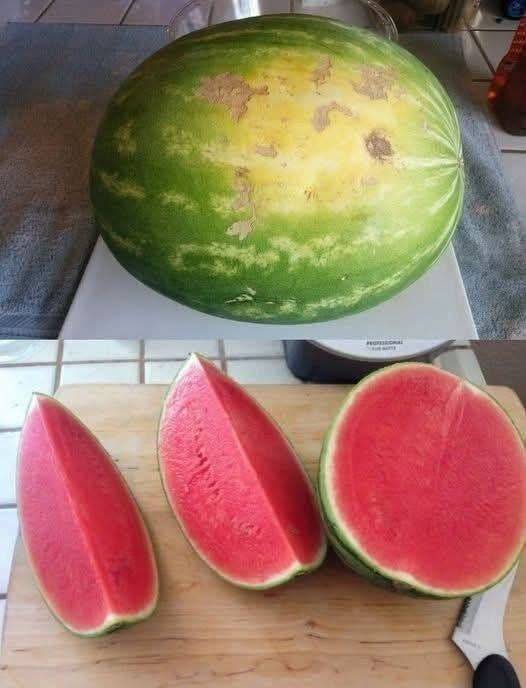
What to look for: A creamy-yellow spot (field spot) on the bottom where it sat on the ground. The darker and creamier the yellow, the sweeter the melon. A hollow, deep sound when tapped.
The thump test: Knock on the watermelon with your knuckles. A ripe one will sound hollow, like a drum. An underripe one will sound flat, like tapping a wall.
The weight test: It should feel heavy for its size (means it’s full of water and not dried out).
Pro tip: Avoid watermelons with soft spots, cracks, or a white (instead of yellow) field spot.
How to Ripen Fruit at Home (And How to Store It)
At room temperature (on the counter):
Avocados, bananas, kiwis, mangoes, peaches, pears, plums, tomatoes
In a paper bag (to speed ripening):
Place unripe fruit in a paper bag with a banana or apple (they release ethylene gas, which speeds ripening). Fold the top loosely.
In the refrigerator (once ripe):
Most fruits can be refrigerated once ripe to extend their life. Berries, grapes, cherries, and citrus do well in the fridge.
Do not refrigerate before ripe:
Avocados, bananas, peaches, pears, plums, tomatoes (cold temperatures stop the ripening process).
What About Organic vs. Conventional?
This is a personal choice. Here’s what you should know.
The “Dirty Dozen” (fruits with the most pesticide residue): Strawberries, grapes, peaches, nectarines, apples, blueberries.
The “Clean Fifteen” (fruits with the least pesticide residue): Avocados, pineapple, mango, kiwi, cantaloupe, honeydew.
If you’re on a budget, prioritize organic for the Dirty Dozen. Conventional is fine for the Clean Fifteen.
Frequently Asked Questions
Is it better to buy fruit that’s already ripe or still firm?
Both. Buy some ripe for immediate use and some still firm for later in the week.
Can I trust the “ripe” sticker on fruit?
Not always. Those stickers are marketing. Use your senses instead.
Why does my fruit sometimes not ripen?
It was picked too early. Some fruits (like peaches and nectarines) will not ripen properly if picked before maturity.
Should I wash fruit before storing it?
No. Wash right before eating. Moisture on the surface encourages mold and spoilage.
What’s the best way to store berries?
Keep them in their original container (with holes for airflow). Do not wash until ready to eat. Remove any moldy berries immediately.
How can I tell if a fruit is GMO?
Most fresh fruits are not GMO. The only commercially available GMO fruits in the US are papaya (from Hawaii) and some varieties of apple (Arctic apples). Everything else is non-GMO.
What’s the difference between “ripe” and “ready to eat”?
“Ripe” means the fruit has reached its peak flavor and texture. “Ready to eat” means it’s ready now. Some fruits (like bananas) are ripe before they’re ready to eat (they need to soften further).
A Confident, Flavorful Shopping Trip
Here’s what I want you to take away from this guide.
You don’t need to be a produce expert to pick good fruit. You just need to use your senses—look, feel, and smell.
Check for soft spots, bruises, and mold. Give it a gentle squeeze. Sniff the stem end. And when in doubt, ask the produce clerk (they usually know which batch is best).
With these tips, you’ll never bring home a mealy peach or a bland watermelon again.
Now go hit the produce aisle with confidence.
Now I’d love to hear from you. What’s your best fruit-picking tip? What’s the worst fruit you’ve ever bought? Drop a comment below – I read every single one.
And if this guide helps you pick better fruit, please share it with a friend who always struggles in the produce aisle. A text, a link, a conversation. Good information is meant to be shared.